
Sorry, but your login has failed. Please recheck your login information and resubmit. If your subscription has expired, renew here.
July-August 2017
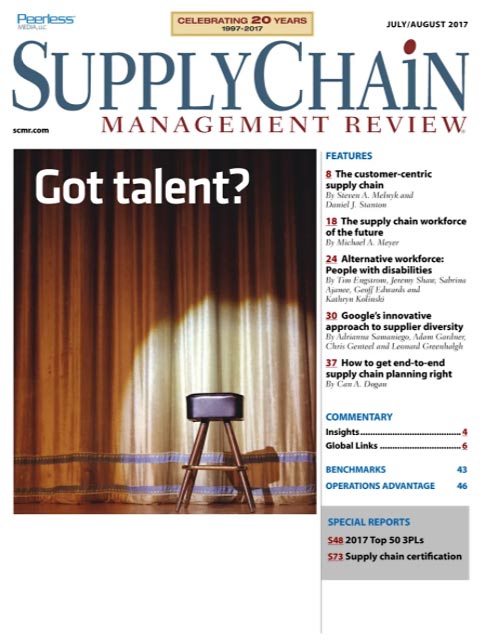
A few years ago, a Harvard Business Review cover posed the question: What’s the secret to winning in the global economy? The answer: Talent. Browse this issue archive.Need Help? Contact customer service 1-508-503-1313 More options
When it comes to improving performance, many organizations focus too much on tactical processes for regular activities such as ordering materials. They neglect the front-end steps they can take to benefit these internal processes and help them run as smoothly as possible. This includes improving processes for appraising and developing suppliers. By conducting these processes effectively, an organization can weed out unnecessary, inefficient or ineffective suppliers and foster stronger relationships with suppliers that are beneficial for the organization. The relationships that come out of a strong supplier development program lead to highly efficient procurement efforts both at the tactical and strategic level.
APQC recently looked at its Open Standards Benchmarking data in procurement to determine how practices aimed at evaluating the capabilities of suppliers affected the procure-to-pay process and procurement efforts overall. APQC found that organizations focusing their supplier relationships on more strategic factors and organizations more broadly and more frequently using supplier scorecards have clear advantages in their procurement efforts overall and in their procure-to-pay processes.
Supplier appraisal practices APQC examined several aspects of how organizations evaluate suppliers. First, it looked at the nature of organizations’ relationships with suppliers. As shown in Figure 1, these relationships are focused on a variety of factors. However, the top three factors are quality, total cost and supplier capabilities. Only 14% of responding organizations indicate their supplier relationships are focused primarily on the price of purchased materials. These results indicate that many organizations are looking at the bigger picture when selecting and retaining suppliers.

This complete article is available to subscribers only.
Log in now for full access or start your PLUS+ subscription for instant access.
SC
MR
Sorry, but your login has failed. Please recheck your login information and resubmit. If your subscription has expired, renew here.
July-August 2017
A few years ago, a Harvard Business Review cover posed the question: What’s the secret to winning in the global economy? The answer: Talent. Browse this issue archive. Access your online digital edition. Download a PDF file of the July-August 2017 issue.When it comes to improving performance, many organizations focus too much on tactical processes for regular activities such as ordering materials. They neglect the front-end steps they can take to benefit these internal processes and help them run as smoothly as possible. This includes improving processes for appraising and developing suppliers. By conducting these processes effectively, an organization can weed out unnecessary, inefficient or ineffective suppliers and foster stronger relationships with suppliers that are beneficial for the organization. The relationships that come out of a strong supplier development program lead to highly efficient procurement efforts both at the tactical and strategic level.
APQC recently looked at its Open Standards Benchmarking data in procurement to determine how practices aimed at evaluating the capabilities of suppliers affected the procure-to-pay process and procurement efforts overall. APQC found that organizations focusing their supplier relationships on more strategic factors and organizations more broadly and more frequently using supplier scorecards have clear advantages in their procurement efforts overall and in their procure-to-pay processes.
Supplier appraisal practices APQC examined several aspects of how organizations evaluate suppliers. First, it looked at the nature of organizations' relationships with suppliers. As shown in Figure 1, these relationships are focused on a variety of factors. However, the top three factors are quality, total cost and supplier capabilities. Only 14% of responding organizations indicate their supplier relationships are focused primarily on the price of purchased materials. These results indicate that many organizations are looking at the bigger picture when selecting and retaining suppliers.
SC
MR


Latest Supply Chain News
- Supply chain resilience isn’t a data problem; it’s a judgment problem
- Beyond the hype: Building flexible and scalable supply chains in a VUCA world
- Why your supply chain risk management plan will fail
- When component verification becomes operational
- Caught between a rock and a hard place: Mapping your supply chain
- More News
Latest Resources
 Explore
Business Management News
- What options do you really have? Shaping the supply chain resilience funnel
- Nexus suppliers: Hidden anchors of resilience in decentralized supply chains
- Finding the ROI in supply chain education
- Managing human and AI teams across the supply chain
- Risk sharing is the new advantage in capital project delivery
- The AI-empowered supply chain leader
- More Business Management
Latest Business Management Resources
Subscribe

Supply Chain Management Review delivers the best industry content.

Editors’ Picks



