
Sorry, but your login has failed. Please recheck your login information and resubmit. If your subscription has expired, renew here.

March-April 2026
The March/April 2026 issue of Supply Chain Management Review examines how supply chain leaders are managing supplier risk, circular supply chain design, AI-driven retail planning, CPG network optimization, and shifting LTL market dynamics to improve resilience and performance. Features include frameworks to prevent supplier failure, operationalize circular economy strategies, prevent retail stockouts using AI, and eliminate costly DC transfer patterns, plus insights from the 34th Annual Study of Logistics and Transportation Trends and a digital-exclusive on the evolving CSCO role. Browse this issue archive.Need Help? Contact customer service 1-508-503-1313 More options
In transportation and logistics, the term integrator describes firms that manage complexity on behalf of others, coordinating transportation, warehousing, procurement, and data across vast networks of providers. These organizations thrive by synchronizing people, processes, and technology into a single, reliable system of execution.
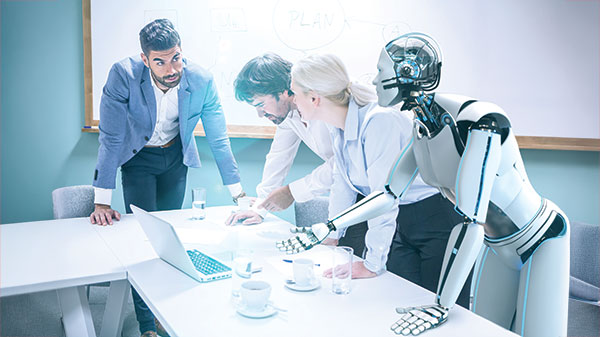
That same mindset now applies to leadership itself. As generative AI (Gen AI) reshapes knowledge work, every team must evolve into an integrator that brings together human expertise and intelligent systems to achieve greater performance.
Leaders in supply chain management are uniquely familiar with integration. Whether aligning procurement with production, or coordinating last-mile delivery through multiple carriers, success depends on harmonizing diverse components into a unified system. Today, the rise of Gen AI requires the same orchestration within organizations, aligning human and digital contributors to work seamlessly together.
SC
MR
Sorry, but your login has failed. Please recheck your login information and resubmit. If your subscription has expired, renew here.
March-April 2026
The March/April 2026 issue of Supply Chain Management Review examines how supply chain leaders are managing supplier risk, circular supply chain design, AI-driven retail planning, CPG network optimization, and… Browse this issue archive. Access your online digital edition. Download a PDF file of the March-April 2026 issue.In transportation and logistics, the term integrator describes firms that manage complexity on behalf of others, coordinating transportation, warehousing, procurement, and data across vast networks of providers. These organizations thrive by synchronizing people, processes, and technology into a single, reliable system of execution.
That same mindset now applies to leadership itself. As generative AI (Gen AI) reshapes knowledge work, every team must evolve into an integrator that brings together human expertise and intelligent systems to achieve greater performance.
Leaders in supply chain management are uniquely familiar with integration. Whether aligning procurement with production, or coordinating last-mile delivery through multiple carriers, success depends on harmonizing diverse components into a unified system. Today, the rise of Gen AI requires the same orchestration within organizations, aligning human and digital contributors to work seamlessly together.
How we got here: A brief history of work
A recent due diligence project in the logistics sector showed how dramatically work has evolved. One of the project’s lead authors, who had no formal coding background, used Gen AI within a secure cloud environment to analyze thousands of shipment records, model transportation costs, and visualize network options. Tasks that once required a full analyst team or an external consulting firm were completed in just a few hours.
This example reflects a broader transformation in how, where, and by whom work gets done. Over the past two decades, these three dimensions have continuously evolved, reshaping the very nature of work itself.
Where work happens. The era of “hoteling” offices gave way to remote work, which later evolved into hybrid arrangements that balance flexibility with in-person collaboration. For global supply chain teams, the shift was profound. Planners, buyers, and logistics managers who once collaborated around whiteboards now collaborate through digital twins and shared analytics dashboards.
When work happens. The rise of “chronoworking” aligned tasks with individual productivity cycles, building on the earlier “follow-the-sun” model of globalized, around-the-clock workflows. Many supply chain control towers now operate 24/7, relying on distributed teams that mirror the
real-time flow of goods across time zones.
Who does the work. Workforces have blended full-time employees with contractors, gig workers, and crowdsourced talent. This fluid mix of talent, sometimes referred to as blended work, blurred organizational boundaries and prepared the ground for the next transformation.
Gen AI has now removed these boundaries all together.
The next evolution: Enter “vibe work”
Generative AI shifts the focus from who or where to how work is accomplished. This is not simply automation; it is joint optimization, where human reasoning and machine intelligence collaborate to solve problems faster and smarter.
We call this new mode vibe work, extending from the software engineering concept of “vibe coding” where professionals steer intent while Gen AI handles execution. Vibe work emphasizes problem framing, creativity, and contextual judgment, qualities that are uniquely human but now strengthened through collaboration with intelligent systems.
In practical terms, Gen AI acts as a 24-hour collaborator. It identifies patterns, tests hypotheses, drafts policy frameworks, and visualizes data. The professionals who thrive in this environment are not necessarily the most technical; they are the most integrative, those who can direct, interpret, and apply AI-generated insights effectively.
From coding to cognition: A shift in how work feels
Early automation replaced repetitive labor, while Gen AI enhances cognitive work. It changes the nature of work from process-driven to exploratory. For many professionals, interacting with Gen AI feels like brainstorming with an exceptionally fast colleague who never tires and always offers an answer. The challenge, and also the opportunity, lies in learning to ask the right questions.
This transformation is already visible in the logistics sector. At DHL, AI-powered digital assistants now support planners in real time, analyzing live data feeds from vehicle telematics, fuel prices, driver schedules, and weather forecasts to recommend optimal route configurations. These systems not only shorten planning cycles but also help planners balance service levels, emissions, and cost. What once required hours of manual route modeling can now be done in minutes, allowing teams to focus on customer experience and network design.
At Amazon, Gen AI supports operations managers by forecasting potential bottlenecks before they occur. Drawing on thousands of daily data signals from fulfillment centers around the world, predictive models identify where capacity imbalances or shipping delays are most likely to arise. Managers can then take proactive action by reassigning labor, redirecting inventory, or rescheduling outbound loads before customers experience any disruption.
In both organizations, humans remain firmly in control, but their roles have evolved. The planner’s value lies less in producing data and more in interpreting, contextualizing, and acting on it. Work has become less about execution and more about integration, reflecting the orchestration that will define the next era of leadership.
Why it matters
Most organizations are not prepared for this shift. The obstacle is not technological; it is organizational. Many leaders have invested heavily in tools but far less in the structures, culture, and mindsets required to use them effectively. Without intentional design and leadership commitment, vibe work may be dismissed as another digital trend rather than recognized as a lasting productivity revolution.
Gen AI is a textbook case of disruptive innovation. As Harvard Business School professor Clay Christensen argued, true disruption democratizes capability by giving new users access to performance once reserved for experts. MIT economist David Autor describes this as augmentation, in which technologies expand the quality, variety, or productivity of human work.
Real-world cases prove the point. In logistics, managers use Gen AI to clean datasets, generate routing models, and build freight forecasts that were once outsourced to specialists. In operations, product teams use AI-generated visuals to align decisions faster across procurement, engineering, and marketing. In human resources, Gen AI drafts hybrid work policies that leaders refine collaboratively.
In every example, professionals remain in control, leveraging AI for speed, insight, and range within a collaborative ecosystem. They are, in essence, acting as integrators.
The role of the integrator
Recasting your team’s function as an integrator requires rethinking how people, processes, and intelligent systems interact. Three imperatives—access, autonomy, and achievement—define where to begin.
1. Access: Make AI ubiquitous, not exclusive
Empower everyone to experiment with Gen AI within secure, ethical boundaries. Too many organizations limit access to “power users” or IT teams, unintentionally reinforcing silos. Instead, broaden participation.
A recent Gartner survey found that in organizations where at least half of the employees use Gen AI weekly, productivity gains doubled compared to firms that restricted access. When AI tools become as common as email, innovation scales naturally.
As JPMorgan Chase CEO Jamie Dimon noted in his 2024 shareholder letter, the right lens is not cost-cutting but waste-cutting. The same principle applies here: use AI to remove friction, not headcount. Shifting from efficiency to effectiveness reframes Gen AI as a collaborative partner rather than a threat.
2. Autonomy: Encourage safe experimentation
Create conditions that allow employees to use AI tools with confidence, supported by clear ethical and security frameworks. Innovation depends on psychological safety, which permits people to explore new ideas without fear of reprimand.
Outdated workflows often block progress. Functionally siloed teams, restrictive data policies, and legacy approvals slow experimentation. Leaders must model trust and curiosity.
One global manufacturer recently discovered that productivity surged only after it decentralized AI experimentation, allowing supply chain analysts, engineers, and planners to build their own copilots. Similar results are emerging across the industry: FedEx’s DataWorks platform enables teams to test AI-driven demand forecasts, while Maersk’s digital labs invite cross-functional teams to co-develop algorithms for cargo tracking and carbon optimization.
Autonomy without accountability can create risk, but autonomy with guardrails transforms AI from a liability into a resource.
3. Achievement: Reward human–machine mastery
Redefine what success looks like. Traditional performance systems reward task completion and functional expertise. Vibe work rewards the ability to frame problems, generate insights, and collaborate with intelligent systems.
Incentivize those who integrate Gen AI into real workflows, whether it is a planner optimizing routes, an analyst visualizing trends, or a buyer modeling supplier risks. Treat this ability as a recognized and valued competency.
Forward-looking organizations are already embedding AI proficiency into leadership frameworks. At Maersk, for example, digital labs train planners to use machine learning and “what-if” network modeling to optimize routes, balance carbon targets, and reduce operating costs. DHL has introduced AI-enabled planning tools through its RAPTOR platform, which helps logistics teams simulate delivery schedules and predict disruptions in real time. Across both organizations, AI-assisted planners have improved forecast accuracy and decision cycle times, allowing leaders to focus on strategic questions rather than data wrangling.
The goal is not to turn everyone into a coder but into a more capable decision-maker.
From augmentation to integration
Vibe work and integrator leadership together represent a shift from technical adoption to cultural integration. Supply chain leaders are especially well-positioned to guide this transition. Their daily responsibilities, which include balancing demand and supply, optimizing networks, and coordinating partners, are inherently integrative.
This same orchestration skill now applies within the organization. Managing hybrid human and AI teams follows the same principles as managing multi-tier supplier ecosystems. The most effective leaders will use Gen AI to sense, synthesize, and act more quickly, much as visibility platforms transformed logistics two decades ago.
For example, consider how supply chain control towers have evolved. Once centered on dashboards and manual data entry, next-generation towers now use AI agents to interpret signals and generate recommendations in real time. The role of the human planner is no longer to find the data but to verify, contextualize, and decide, which is precisely the work of an integrator.
Leading the cultural shift
Becoming an integrator is not a technical transformation; it is a cultural one. Leaders must set expectations that experimentation is encouraged, that insights trump hierarchy, and that human oversight remains essential.
To do this, start small. Encourage teams to apply Gen AI in specific use cases: a procurement analyst drafting supplier scorecards, a transportation manager summarizing carrier performance reports, or a sustainability team mapping emissions data. Each small success builds confidence and trust in the new workflow.
At the same time, communicate boundaries. Data governance, intellectual property protection, and ethical review must evolve alongside access. The most advanced organizations are pairing AI “champions” within each department with centralized oversight teams that ensure consistency and compliance without stifling creativity.
The lesson from past technology waves—ERP, cloud computing, robotic automation—is clear: tools succeed when people trust them and see value in using them.
Unleashing the opportunity
Vibe work is no longer an emerging concept; it is the operating reality. The difference between firms that thrive and those that stall will depend on leadership posture, not tool choice.
Organizations that embrace access, autonomy, and achievement will build adaptive, high-performing teams that view Gen AI not as a shortcut but as an accelerator. The true differentiator will be integrators, leaders and organizations that align human creativity with machine intelligence to achieve shared goals.
For supply chain organizations, this moment represents an important inflection point. The same capability that once defined operational excellence—the ability to coordinate across silos—will now determine competitive advantage in knowledge work. Just as physical supply chains have evolved from linear pipelines into dynamic networks, cognitive work is becoming a connected system of collaboration between humans and machines.
Manager’s checklist: Leading the integrator shift
- Reframe AI adoption: Move from automation to augmentation.
- Democratize access: Make AI tools as common as spreadsheets, safely and securely.
- Encourage experimentation: Build trust, not control, around new workflows.
- Reward integration: Recognize those who combine human and machine insight to deliver better outcomes.
- Model the mindset: Show curiosity and adaptability in your own work; it will cascade through your team.
- Connect technology to strategy: Ensure every AI initiative links directly to measurable business outcomes.
- Invest in fluency, not fear: Provide training that builds comfort and confidence, not compliance checklists.
Conclusion
Generative AI will continue to evolve, but the leadership imperative is already here. To lead with Gen AI, think like an integrator: coordinate people and machines, unify creativity and computation, and design workflows in which human judgment and digital intelligence work in harmony. The leaders who master this integration will not only adapt to the future of work; they will define it.
About the authors
Tom Davis is a clinical associate professor in the strategy area at the University of Pittsburgh’s School of Business and a former Fortune 100 strategy and technology executive in financial services.
Dennis Oates, DBA, is an assistant professor of practice in supply chain management at Marquette University and a former Fortune 100 senior executive in the transportation and logistics industry.
SC
MR

More Generative AI
What's Related in Generative AI
 Explore
Topics
Business Management News
- Innovators Netstock, Pickle Robot win NextGen Solution Provider awards
- Bigger trucks versus broken bridges and roads
- From salon to dock door: Repurposing scheduling software for inbound flow
- The biggest barrier to AI in supply chains isn’t technology
- Rebuilding a planning function around the physical world
- Why companies blame the wrong supplier … and miss the real failure
- More Business Management
Latest Business Management Resources
Subscribe

Supply Chain Management Review delivers the best industry content.

Editors’ Picks



