
The rapid growth of the secondhand economy is forcing logistics providers to rethink how supply chains are designed. While traditional transportation networks have been optimized for speed, efficiency and automation, oversized, one-of-a-kind products require a different approach—one centered on care, transparency and customer expectations.
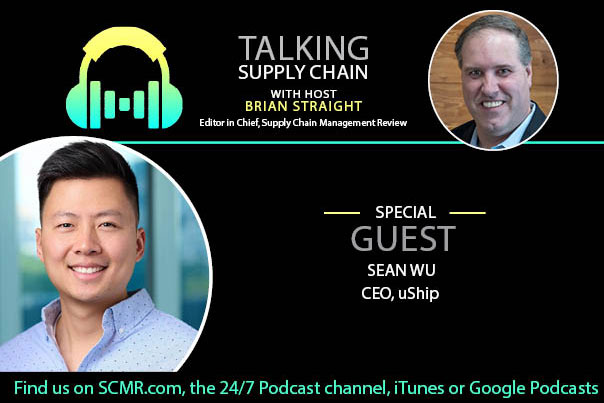
In this episode of Talking Supply Chain, Brian Straight speaks with Sean Wu, CEO of uShip, about the rise of recommerce, the logistics challenges of moving unique items and why digital marketplaces are making nationwide resale more accessible than ever.
Theme 1: The secondhand economy is becoming a major logistics opportunity
The resale market has expanded rapidly over the past several years, driven by inflation, changing consumer behavior and growing acceptance of secondhand purchases among younger buyers. Wu noted that the market has doubled in the past seven years, creating new transportation needs that traditional parcel networks were never designed to handle.
Unlike standardized products, secondhand goods are often unique, oversized and shipped between individual buyers and sellers rather than businesses.
Key takeaway: Recommerce is no longer a niche market. It is creating an entirely new category of freight that requires specialized transportation solutions.
Key quote: “The secondhand economy has doubled in the last seven years in terms of sales.”
Theme 2: Speed isn’t always the most important supply chain metric
Modern supply chains have been engineered around speed. But Wu argues that customers shipping heirlooms, antique furniture or pianos often value reliability and communication more than same-day delivery.
For irreplaceable products, setting accurate expectations and providing visibility throughout the shipment becomes more valuable than shaving a day off transit time.
Key takeaway: For unique freight, customer confidence often outweighs delivery speed.
Key quote: “Speed might not be at the top. It’s more around expectations and care.”
Theme 3: Digital marketplaces are expanding the resale economy
One reason recommerce continues to grow is that technology has dramatically expanded the geographic reach of buyers and sellers.
Rather than being limited to local buyers, consumers can now purchase furniture, vehicles and other large items from across the country because transportation has become easier to arrange.
Platforms like uShip help remove one of the biggest historical barriers to resale: figuring out how to move oversized products.
Key takeaway: Technology isn’t just supporting recommerce—it is actively enabling its growth.
Key quote: “It takes a lot of ambiguity ... a lot of perceived risk out of jumping into the used world.”
Theme 4: Trust is the real competitive advantage
Unlike parcel shipping, where products are often interchangeable, secondhand shipments frequently involve items with significant financial or sentimental value.
Wu explained that reviews, communication, experienced carriers and transparent expectations are essential for building customer confidence. The marketplace’s reputation depends as much on trust as transportation.
Key takeaway: In the secondhand economy, trust becomes part of the product being delivered.
Key quote: “These people care about their reviews. These people care about their livelihood.”
Theme 5: Software is becoming the backbone of specialized logistics
While automation dominates discussions around warehouse operations, Wu believes software is the real differentiator in the oversized freight market.
Route optimization, carrier matching and marketplace intelligence help reduce empty miles while connecting specialized carriers with shipments that fit their capabilities.
Key takeaway: Digital intelligence is becoming just as important as physical transportation assets.
Key quote: “Software can do route planning ... suggest shipments along the way ... and help you make your trip a little bit more efficient.”
Bottom line
The conversation highlights how supply chains optimized for speed are increasingly intersecting with a growing segment that values care, transparency and flexibility above all else. As recommerce continues to expand, logistics providers will need to balance efficiency with customer experience while leveraging technology to remove friction from transporting unique and oversized goods.
Subscribe to the Supply Chain Management Review podcast
Sign up today and get the next podcast episode sent to you. Subscribe via Apple and Google Podcasts or choose another podcast platform. Subscribe via RSS or download an MP3 or media file.Latest Supply Chain Management Review podcast episodes
Here are a few of our latest podcast episodes.- Frictionless Supply Chain: The New Tech Titans of China.
- Talking Supply Chain: The state of US reindustrialization.
- Talking Supply Chain: The Strait of Hormuz is open, but normal is not near.
- Talking Supply Chain: Building the Supply Biome.
- Talking Supply Chain: Moving from AI pilot to execution with AWS’ Petra Schindler-Carter.
- Talking Supply Chain: How logistics leaders are winning in volatile times.
SC
MR

Subscribe

Supply Chain Management Review delivers the best industry content.

Editors’ Picks



