
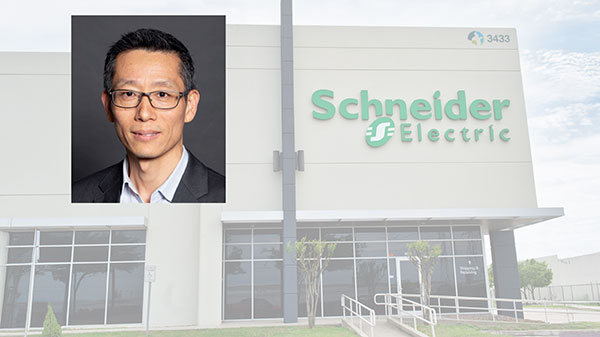
When Jackie Zhu took over Schneider Electric’s North American Supply Chain earlier this year, he stepped into one of the industry’s most demanding leadership roles. Schneider Electric has topped Gartner’s Supply Chain Top 25 rankings for four consecutive years, earning global recognition for operational excellence, innovation and execution.
For Zhu, the promotion wasn’t simply the culmination of more than two decades at Schneider Electric. It was the product of a career deliberately built across nearly every major function inside the business—from sales and procurement to logistics, industrialization and research and development.
“I’ve [not] been in this role not very long, around five months,” Zhu told Supply Chain Management Review. “There’s been no honeymoon. There are many challenges, but many achievements as well.”
Now serving in the role of Senior Vice President, North America Supply Chain Officer, Zhu believes his broad career experiences are exactly what is setting him up for success in his new role.
Building a career across the business
Many supply chain leaders spend their careers mastering a single discipline before moving into executive leadership. Zhu intentionally did the opposite.
Over 23 years at Schneider Electric, he has led procurement, strategic sourcing, logistics, industrialization, global supply chain strategy and research and development. Most recently, he led the company’s Power Products division, overseeing both R&D and global supply chain strategy for products supporting data centers, hospitals, airports and other mission-critical infrastructure.
His first professional role, however, wasn’t in supply chain at all. It was sales. Looking back, Zhu credits those early years with shaping how he approaches leadership today.
“I learned how important it is to listen to customers, how challenging it is to win business, and how important supply chain is in supporting customers and the business,” he said.
The career move that changed everything
For much of his Schneider career, Zhu considered himself a procurement professional.
He spent more than a decade in procurement, eventually leading sourcing operations across China. Then Schneider Electric approached him with an unexpected opportunity: become vice president of logistics.
He almost declined.
“To be frank, I was really hesitant,” Zhu recalled. “I’d worked in procurement for so many years.”
Senior leaders encouraged him to think differently.
“They came to me and said, ‘We have trust in your mindset, your leadership and your ability to drive transformation,’” Zhu said.
Their advice resonated.
“What you’ve learned in procurement wouldn’t be lost,” they told him. “What you learn in logistics will broaden your vision, your experience and your career.”
The experience fundamentally changed his perspective on leadership.
“I proved that when you move into a totally new domain, you learn much faster. Your agility and resilience become much higher,” Zhu said. “After that, I told myself that if someone asked me to take on something where I had no experience, I wouldn’t hesitate at all.”
Every decision starts with the customer
Ask Zhu what has remained constant throughout his career, and the answer comes quickly. Everything begins with the customer.
“I always tell myself and my team that every decision we make needs to be around the customer,” he said. “It can be an external customer or an internal customer.”
That philosophy extends throughout Schneider Electric’s operations. Factories serve other factories. Procurement serves manufacturing. Logistics serves both internal partners and end customers.
“The key is asking whether we’re creating value for the customer and improving customer satisfaction,” Zhu said. “That’s the ultimate goal and the ultimate principle that helps us make decisions.”
Leading the industry’s benchmark North American supply chain
Stepping into leadership of Schneider Electric’s North American supply chain means balancing operational excellence with continuous transformation. For Zhu, that means advancing Industry 4.0 initiatives, expanding artificial intelligence and building greater end-to-end visibility across the business while maintaining the operational discipline that earned Schneider Electric its reputation.
“We need to continue the transformation using AI, IoT and data so we have end-to-end traceability and end-to-end visibility across the supply chain,” he said. “That enables us to make decisions in real time.”
Yet Zhu believes technology alone isn’t enough.
Leadership requires what he calls “intellectual honesty.”
“We need to be much more open,” he said. “Sometimes we need to have intellectual honesty—to admit where we still have gaps and how we can learn from inside the organization, from the market, and even from startups.”
He also believes organizations often undermine themselves by trying to accomplish too much at once.
“If you have 10 or 20 priorities, it’s difficult to align the organization,” Zhu said. Instead, leaders should focus on “the top three or five priorities” that matter most to customers and the business.
Designing resilience into the supply chain
Like many supply chain executives, Zhu spends significant time thinking about resilience. Unlike many others, he believes resilience begins before a disruption ever occurs.
“We call it resilience by design,” he said.
Rather than reacting to disruptions, Schneider Electric incorporates resilience into network design decisions—from plant locations and supplier strategies to transportation flows and distribution center placement.
Artificial intelligence and end-to-end visibility then enable faster responses when disruptions occur. Zhu described one example in which damaged freight automatically triggered an AI-supported recommendation to fulfill the order from another warehouse, allowing Schneider Electric to replace the shipment within 24 hours without disrupting the customer.
Sustainability through visibility
The same philosophy recently earned Schneider Electric national recognition.
Earlier this year, the company received the 2026 U.S. Department of Energy Better Practice Award for scaling circularity across its operations. The initiative uses digital technologies to improve visibility into material flows, identify waste, optimize energy consumption and keep products and materials in use longer.
According to Zhu, the company applies the same technologies internally that it delivers to customers.
“We deploy the same approach we deliver to our customers—to electrify, automate and digitize—so they can achieve higher productivity, improve efficiency, reduce waste and modernize infrastructure,” he said.
By monitoring energy consumption in real time—from HVAC systems to manufacturing equipment—Schneider Electric can pinpoint inefficiencies, recommend corrective actions and reduce unnecessary energy use before it becomes costly.
A leader still learning
Despite leading one of the world’s premier supply chain organizations, Zhu insists the work is never finished.
“It’s a great responsibility,” he said. “I consider it positive pressure because it pushes us toward continuous improvement, continuous learning and keeping an open mind to transform our supply chain.”
Looking back, Zhu believes the willingness to leave his comfort zone—not mastering any single function—prepared him for the role he holds today.
It’s a lesson he now hopes to pass along to the next generation of supply chain leaders: the best executives aren’t defined by the number of years they spend in one discipline, but by the breadth of perspectives they develop across the business.
SC
MR

More Talent Development
- Schneider Electric’s Jackie Zhu: Why the best leaders build careers across the business
- AI is driving change in supply chain skills and talent
- Developing the next generation of supply chain leaders: Is higher education serving the needs of the marketplace?
- The value proposition: Bridging the skills gap between the SCM degree and the workplace
- Developing supply chain talent for new product development
- More Talent Development
What's Related in Talent Development
 Explore
Topics
Business Management News
- Innovators Netstock, Pickle Robot win NextGen Solution Provider awards
- Bigger trucks versus broken bridges and roads
- From salon to dock door: Repurposing scheduling software for inbound flow
- The biggest barrier to AI in supply chains isn’t technology
- Rebuilding a planning function around the physical world
- Why companies blame the wrong supplier … and miss the real failure
- More Business Management
Latest Business Management Resources
About the Author
Brian Straight, SCMR Editor in Chief
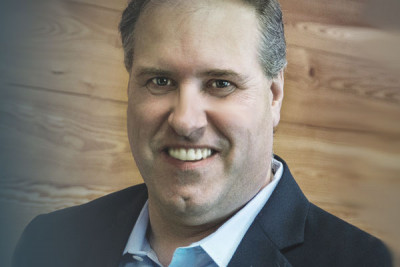
Brian Straight is the Editor in Chief of Supply Chain Management Review. He has covered trucking, logistics and the broader supply chain for more than 15 years. He lives in Connecticut with his wife and two children. He can be reached at [email protected], @TruckingTalk, on LinkedIn, or by phone at 774-440-3870.
Follow SCMR on social media.
@SupplyChainManagementReview on Facebook
@SCMR on Twitter
SCMR on Linkedin
Subscribe

Supply Chain Management Review delivers the best industry content.

Editors’ Picks



