
Sorry, but your login has failed. Please recheck your login information and resubmit. If your subscription has expired, renew here.
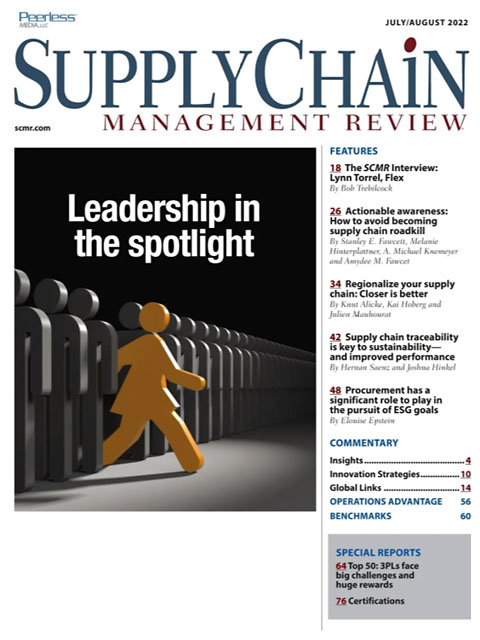
July-August 2022
In late May, I attended the Institute for Supply Management’s first live conference since 2019. The message from Tom Derry, ISM’s CEO, was simple: These are challenging times, but along with the challenges come opportunities for those of us who can step up and lead our organizations into the future. One area where supply chain will be tasked with stepping up to the plate is going to be ESG, the initialism for environmental, social and governance. It was a major theme of the conference, and while all of the reporting requirements are still being debated, there’s little question that supply chain will lead the charge in environmental initiatives… Browse this issue archive.Need Help? Contact customer service 1-508-503-1313 More options
Editor’s Note: This marks Larry Lapide’s 100th Insights column.
The last two years have upended forecasting and planning processes. Some companies and public officials appear to have gotten things right, while others have gotten things wrong. While the current times have been extraordinary, getting forecasting and planning right is always a battle. Throughout my career I’ve listened to practitioners discuss what they have done that has been successful or not. A couple of interesting talks were from managers who were brought into their companies to redo demand forecasting and planning processes—such as sales and operations planning (S&OP), similar to what had to be done by many managers during the pandemic.
One discussion that really resonated with me was from a manager who said that she took over management during a chaotic time in her business. As a result, her main strategy was to first install processes to achieve stability goals; that came before she even thought about optimizing processes. The following definitions clarify the differences.
- Chaotic: completely confused or disordered.
- Stability: resistance to change, especially sudden change or deterioration.
- Optimal: the greatest degree or best result obtained or obtainable under specific conditions.
SC
MR
Sorry, but your login has failed. Please recheck your login information and resubmit. If your subscription has expired, renew here.
July-August 2022
In late May, I attended the Institute for Supply Management’s first live conference since 2019. The message from Tom Derry, ISM’s CEO, was simple: These are challenging times, but along with the challenges come… Browse this issue archive. Access your online digital edition. Download a PDF file of the July-August 2022 issue.Editor’s Note: This marks Larry Lapide’s 100th Insights column.
The last two years have upended forecasting and planning processes. Some companies and public officials appear to have gotten things right, while others have gotten things wrong. While the current times have been extraordinary, getting forecasting and planning right is always a battle. Throughout my career I’ve listened to practitioners discuss what they have done that has been successful or not. A couple of interesting talks were from managers who were brought into their companies to redo demand forecasting and planning processes—such as sales and operations planning (S&OP), similar to what had to be done by many managers during the pandemic.
One discussion that really resonated with me was from a manager who said that she took over management during a chaotic time in her business. As a result, her main strategy was to first install processes to achieve stability goals; that came before she even thought about optimizing processes. The following definitions clarify the differences.
- Chaotic: completely confused or disordered.
- Stability: resistance to change, especially sudden change or deterioration.
- Optimal: the greatest degree or best result obtained or obtainable under specific conditions.
 SUBSCRIBERS: Click here to download PDF of the full article.
SC
MR


Latest Supply Chain News
- Caught between a rock and a hard place: Mapping your supply chain
- What options do you really have? Shaping the supply chain resilience funnel
- Nexus suppliers: Hidden anchors of resilience in decentralized supply chains
- Developing the next generation of supply chain leaders: Is higher education serving the needs of the marketplace?
- The value proposition: Bridging the skills gap between the SCM degree and the workplace
- More News
Latest Podcast
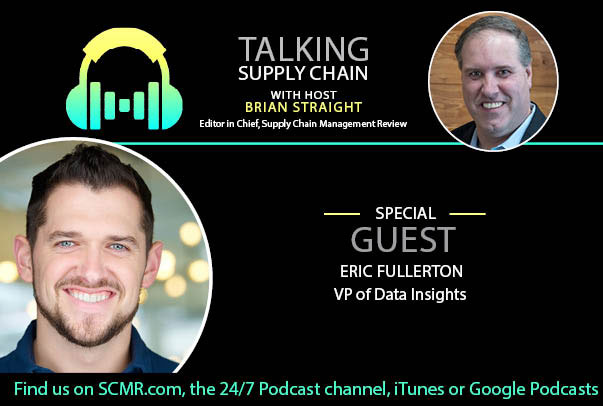
 Explore
Procurement & Sourcing News
- When component verification becomes operational
- Caught between a rock and a hard place: Mapping your supply chain
- What options do you really have? Shaping the supply chain resilience funnel
- Nexus suppliers: Hidden anchors of resilience in decentralized supply chains
- Lead time economics: What semiconductor supply chains reveal about strategic planning
- Risk sharing is the new advantage in capital project delivery
- More Procurement & Sourcing
Latest Procurement & Sourcing Resources
Subscribe

Supply Chain Management Review delivers the best industry content.

Editors’ Picks



