
Sorry, but your login has failed. Please recheck your login information and resubmit. If your subscription has expired, renew here.

September-October 2017
When it comes to the next generation of supply chain management, the future just may be now. That’s one of the conclusions reached by Greg Gorbach, an analyst at the research firm ARC Advisory Group, after surveying supply chain executives, including subscribers to Supply Chain Management Review, on the digitization of their supply chains. In “The Great Digitization of Industry,” Gorbach notes that while it may take years for the widespread adoption of new technologies such as machine learning, additive manufacturing, smart factories and advanced analytics to become commonplace, digitization across verticals is happening faster than many of us… Browse this issue archive.Need Help? Contact customer service 1-508-503-1313 More options
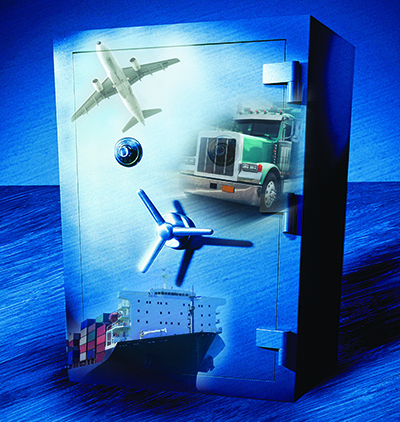
It doesn’t take a tsunami, flood, cyber attack or geopolitical instability to disrupt a supply chain. In some cases, all it takes is one Tier 2 supplier to file for bankruptcy—or one plant fire at a Tier 1 vendor’s facility—to reduce the integrity of the entire global supply chain, damage the firm’s brand and send its customers look¬ing for other suppliers. In the absence of an accurate crystal ball, many companies are turning to software and technology platforms focused on credit and financial risk to help them navigate the maze, stay informed and make good decisions.
Supply chain disruption happens
According to the Business Continuity Institute, supply chain resiliency isn’t exactly top of mind for today’s organization. In its most recent Supply Chain Resilience Report (2016), BCI says that 70% of companies surveyed experienced at least one supply chain disruption over the prior 12 months, and that 34% (up from 15% in 2015) attribute those lapses to “disruptions from their external, inbound supply chains.”
“This underscores the strong dependencies of organizations to their suppliers which may prove to be a point of failure if left unmanaged,” BCI points out in its report, which pinpointed loss of productivity, customer com¬plaints, impaired service outcomes, brand/reputation dam¬age, and revenue losses as the biggest problems caused by the disruptions.

This complete article is available to subscribers only.
Log in now for full access or start your PLUS+ subscription for instant access.
SC
MR
Sorry, but your login has failed. Please recheck your login information and resubmit. If your subscription has expired, renew here.
September-October 2017
When it comes to the next generation of supply chain management, the future just may be now. That’s one of the conclusions reached by Greg Gorbach, an analyst at the research firm ARC Advisory Group, after surveying… Browse this issue archive. Access your online digital edition. Download a PDF file of the September-October 2017 issue.It doesn't take a tsunami, flood, cyber attack or geopolitical instability to disrupt a supply chain. In some cases, all it takes is one Tier 2 supplier to file for bankruptcy—or one plant fire at a Tier 1 vendor's facility—to reduce the integrity of the entire global supply chain, damage the firm's brand and send its customers look¬ing for other suppliers. In the absence of an accurate crystal ball, many companies are turning to software and technology platforms focused on credit and financial risk to help them navigate the maze, stay informed and make good decisions.
Supply chain disruption happens
According to the Business Continuity Institute, supply chain resiliency isn't exactly top of mind for today's organization. In its most recent Supply Chain Resilience Report (2016), BCI says that 70% of companies surveyed experienced at least one supply chain disruption over the prior 12 months, and that 34% (up from 15% in 2015) attribute those lapses to “disruptions from their external, inbound supply chains.”
“This underscores the strong dependencies of organizations to their suppliers which may prove to be a point of failure if left unmanaged,” BCI points out in its report, which pinpointed loss of productivity, customer com¬plaints, impaired service outcomes, brand/reputation dam¬age, and revenue losses as the biggest problems caused by the disruptions.
SC
MR

More Finance
- Wayfair executive to share lessons from building a tech-driven delivery network in NextGen Keynote
- Finance as a transformation catalyst: A How-To guide for supply chain finance leaders
- AI won’t fix a broken supply chain foundation
- Eli Lilly’s Mar Gimeno to keynote at NextGen Supply Chain Conference 2026
- NextGen extends 2026 award, speaker submission deadlines amid strong industry interest
- Amazon Supply Chain 101: Enabling efficiency and growth for businesses everywhere—and everywhere they sell
- More Finance
Latest Resources
 Explore
Business Management News
- Why companies blame the wrong supplier … and miss the real failure
- NextGen Supply Chain Conference unveils agenda focused on AI, execution and the future of leadership
- Supply chain resilience isn’t a data problem; it’s a judgment problem
- Beyond the hype: Building flexible and scalable supply chains in a VUCA world
- Why your supply chain risk management plan will fail
- What options do you really have? Shaping the supply chain resilience funnel
- More Business Management
Latest Business Management Resources
About the Author
Bridget McCrea, Contributing Editor

Bridget McCrea is a Contributing Editor for Logistics Management based in Clearwater, Fla. She has covered the transportation and supply chain space since 1996 and has covered all aspects of the industry for Logistics Management and Supply Chain Management Review. She can be reached at [email protected], or on Twitter @BridgetMcCrea
Follow SCMR on social media.
@SupplyChainManagementReview on Facebook
@SCMR on Twitter
SCMR on Linkedin
Subscribe

Supply Chain Management Review delivers the best industry content.

Editors’ Picks



