
Sorry, but your login has failed. Please recheck your login information and resubmit. If your subscription has expired, renew here.

December 2025
The December issue of Supply Chain Management Review presents our annual Best of SCMR, spotlighting 2025’s most-read articles on supply chain leadership, AI adoption, digital transformation, sourcing resilience, and end-to-end visibility. This edition revisits the stories that shaped global supply chain strategy in 2025 and features two special reports: a recap of the NextGen 2025 Conference in Nashville and an in-depth look at digital twins for navigating volatility. We close with five hopes for 2026, including stronger talent investment, smarter AI, sustainable operations, resilient sourcing networks, and tighter C-suite alignment across global… Browse this issue archive.Need Help? Contact customer service 1-508-503-1313 More options
For decades, business leaders largely assumed that globalization and free trade would steadily reduce barriers. Tariffs were seen as temporary political tools, usually negotiated away over time. That assumption is gone. Tariffs are no longer a short-term disruption. They are becoming a structural part of supply chains and cost structures, and executives need to plan accordingly.
At the recent ASCM CHAINge conference, former U.S. Commerce Secretary Gina Raimondo underscored the reality that tariffs are not a passing phenomenon, but are more likely to become a structural part of your cost structure moving forward.
SC
MR
Sorry, but your login has failed. Please recheck your login information and resubmit. If your subscription has expired, renew here.
December 2025
The December issue of Supply Chain Management Review presents our annual Best of SCMR, spotlighting 2025’s most-read articles on supply chain leadership, AI adoption, digital transformation, sourcing resilience, and… Browse this issue archive. Access your online digital edition. Download a PDF file of the December 2025 issue.For decades, business leaders largely assumed that globalization and free trade would steadily reduce barriers. Tariffs were seen as temporary political tools, usually negotiated away over time. That assumption is gone. Tariffs are no longer a short-term disruption. They are becoming a structural part of supply chains and cost structures, and executives need to plan accordingly.
At the recent ASCM CHAINge conference, former U.S. Commerce Secretary Gina Raimondo underscored the reality that tariffs are not a passing phenomenon, but are more likely to become a structural part of your cost structure moving forward.
“It is chaotic and the reason it’s chaotic is because you don’t know what’s going to come next,” she said during her keynote address. “I wish I could tell you it was going to settle down, but because of the politics, which are driving this disruptive atmosphere again on both sides of the aisle, I think we’re in this disruption for a while. And so my best thought to you is fasten your seatbelt. Don’t assume things are going to calm down and make your contingency plans accordingly.”
The concept of planning accordingly is not new, but something Raimondo said struck me, and I’m assuming many in the audience, differently. Tariffs aren’t going away.
“Once the tariff is levied, it is hard to take it away,” she said, pointing to her experience under the Biden administration and unsuccessfully arguing to reduce or eliminate tariffs put in place during the first Trump administration. “I’m not saying it never goes away, but I argued with President Biden … I was unsuccessful. President Biden wouldn’t do it. No one wants to be the guy that reduces the tariff and is then susceptible to the criticism that we’re going to lose manufacturing jobs in the U.S.”
In other words, even leaders who favor reducing tariffs often find themselves constrained. The political symbolism of tariffs—equating them with protecting jobs—makes it almost impossible to roll them back. Plus, there is the revenue factor. We still don’t know where the current tranche of Trump tariffs will ultimately end up, but what we do know is that there is some not-insignificant amount of revenue pouring into the government coffers because of them. We can argue over who is paying that—importers, exporters, or consumers—but the revenue is real.
For supply chain leaders, the implications are clear. Tariffs are not a passing storm to be weathered. They are becoming embedded in the operating environment, shaping sourcing decisions, cost models, and competitive strategy. As Raimondo noted: “Don’t assume things are going to calm down.”
That is the mindset companies must now adopt. The sooner executives accept tariffs as a permanent feature of global trade, the better prepared they will be to build resilient, adaptive supply chains that can thrive in a tariff-defined world. Like them or hate them. It’s time to manage them.
SC
MR


More Tariffs
- Finding your rhythm: SME supply chain footwork when the rules keep changing
- Advancing the enterprise in volatile times: Supply chain as a source of reason
- Supreme Court strikes down Trump’s IEEPA tariffs: What procurement leaders must do next
- How CPOs can protect their supply chains against tariff risk—without overreacting
- Is your trade compliance team organized for battle?
- More Tariffs
What's Related in Tariffs
 Explore
Topics
Business Management News
- Why companies blame the wrong supplier … and miss the real failure
- NextGen Supply Chain Conference unveils agenda focused on AI, execution and the future of leadership
- Supply chain resilience isn’t a data problem; it’s a judgment problem
- Beyond the hype: Building flexible and scalable supply chains in a VUCA world
- Why your supply chain risk management plan will fail
- What options do you really have? Shaping the supply chain resilience funnel
- More Business Management
Latest Business Management Resources
About the Author
Brian Straight, SCMR Editor in Chief
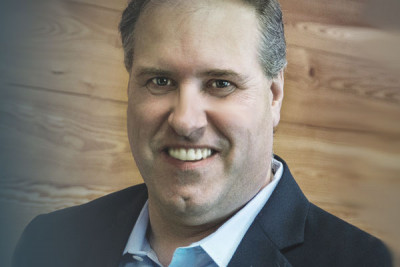
Brian Straight is the Editor in Chief of Supply Chain Management Review. He has covered trucking, logistics and the broader supply chain for more than 15 years. He lives in Connecticut with his wife and two children. He can be reached at [email protected], @TruckingTalk, on LinkedIn, or by phone at 774-440-3870.
Follow SCMR on social media.
@SupplyChainManagementReview on Facebook
@SCMR on Twitter
SCMR on Linkedin
Subscribe

Supply Chain Management Review delivers the best industry content.

Editors’ Picks



