
Since 2020, supply chains have been in a period of transformation. Companies first sought to maintain continuity in the face of massive disruption and then pivoted to improve resiliency and manage growth in emerging channels, all while contending with persistent labor shortages and shifting customer expectations.
A major component of the response to these challenges has been an infusion of technology in the form of more advanced systems and increased automation. While these technologies have become almost essential in managing the modern supply chain, they also bring their own set of implementation and management challenges.
While supply chain leaders may be hoping for stability in the coming years, research presented in the DHL Supply Chain Insight 2030 report indicates the pace of change and disruption may actually be accelerating. This increased pace of change and unpredictability in North American supply chains is threatening to increase the complexity of these networks and weaken their resiliency.
According to the survey, supply chain leaders expect a range of disruptive forces through 2030. A substantial majority anticipate cybersecurity threats (70%), higher labor costs (69%), labor shortages (66%), natural disasters (63%) and international tensions (62%) will all impact their networks. These concerns reflect a complex threat landscape that can stretch expertise and resources across multiple and diverse fronts. From cyberattacks that shut down operations to labor shortages that reduce service levels to international tensions that disrupt supply, the last several years have made participants wary about what the future holds.
Technology Offers a Lifeline
For many supply chain leaders, the answer to overcoming these challenges seems to be the deployment of more technology. A strong majority of respondents to the survey expect to become more reliant on established and emerging technologies in the next five years.
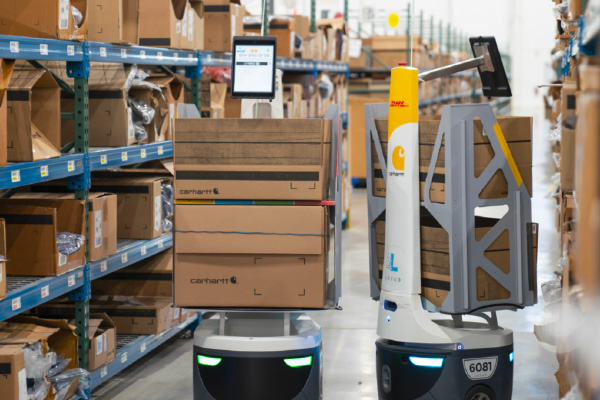
For instance, 73% of participants expect their supply chains to become more reliant on AI in the next five years. Sixty-eight percent increased dependence on robotics to perform routine tasks, while 63% of respondents see an increased focus on the ability to orchestrate supply chain resources to reduce costs. The hope is clearly that by increasing automation, intelligence and orchestration, organizations will be able to drive out inefficiencies, improve predictability and enable agility.
If these technologies continue to progress as anticipated, supply chains will evolve to become more intelligent and interconnected systems, where AI, robotics and IoT work together to enable more predictable and orchestrated material flows supported by lower cost and lower emissions transportation.
However, for organizations to realize this vision, they will need to navigate the challenges that accompany increased technology reliance, including a complex and ever-evolving technology landscape, workforce reskilling, managing implementations without disrupting operations, data integration and management and cybersecurity.
One of the most important factors in realizing the promised benefits from technologies is the selection and deployment. At DHL Supply Chain, we take great pride in the culture of continuous innovation we have created. As part of this culture, we utilize a proven process to assess and integrate leading-edge technologies, ensuring they bring value to customers and enhance operations.
These technology implementations are based on use cases to drive business outcomes, including increased efficiency, cost savings and greater resiliency. As a result, they are ideal examples of how companies can achieve a balanced, integrated approach that blends the best attributes of technology and employees.
The following are 10 tips for maximizing the value of your technology. DHL Supply Chain can assist with all these.
- Adopt a mindset that recognizes that technology is a tool and innovation is needed to integrate it meaningfully into your supply chain to ensure it provides value and helps achieve your operational objectives.
- Work with a trusted partner, such as DHL Supply Chain, that invests significantly in new technologies across its network to help alleviate your capital funding challenge.
- Select credible technology vendors that understand the supply chain environment, can support the size and needs of your deployment, and will have the longevity and capacity to offer support after the deployment is up and running.
- Identify what you want to accomplish with the technology, focusing on operational challenges you are trying to overcome, objectives you want to achieve and the team and infrastructure you need to proceed.
- Do your research and assess your options so you can adequately determine the right strategic approach to take and the right technology to deploy.
- Consider the workforce and determine where employees might be supported or even relieved of non-value tasks so they can focus on more strategic and value-adding tasks that enhance operational performance.
- Know your operations and how your equipment and people are being used so you can identify tasks that are ideal candidates for new technology, as well as areas where any displaced employees may be deployed.
- Be prepared to make changes to established processes and workflows, either by modifying existing ones or adding new ones, to ensure the technology is seamlessly integrated to add value.
- Determine the metrics and data you will use to measure success of the installation and performance of the technology, while also having a plan to share that information internally and adjust as needed.
- Have a plan that includes implementation, as well as a path to expand beyond the initial successful implementation, either in another operation or with a different use case.
Read the DHL Supply Chain Insight 2030 report for insight on the expected disruptive forces and to understand how DHL Supply Chain can provide the needed expertise and resources to keep pace with change.
SC
MR

More Supply Chain Management
- Why companies blame the wrong supplier … and miss the real failure
- NextGen Supply Chain Conference unveils agenda focused on AI, execution and the future of leadership
- Supply chain resilience isn’t a data problem; it’s a judgment problem
- Why your supply chain risk management plan will fail
- What options do you really have? Shaping the supply chain resilience funnel
- Nexus suppliers: Hidden anchors of resilience in decentralized supply chains
- More Supply Chain Management
Latest Resources
 Explore
Topics
Business Management News
- Why companies blame the wrong supplier … and miss the real failure
- NextGen Supply Chain Conference unveils agenda focused on AI, execution and the future of leadership
- Supply chain resilience isn’t a data problem; it’s a judgment problem
- Beyond the hype: Building flexible and scalable supply chains in a VUCA world
- Why your supply chain risk management plan will fail
- What options do you really have? Shaping the supply chain resilience funnel
- More Business Management
Latest Business Management Resources
Subscribe

Supply Chain Management Review delivers the best industry content.

Editors’ Picks



