
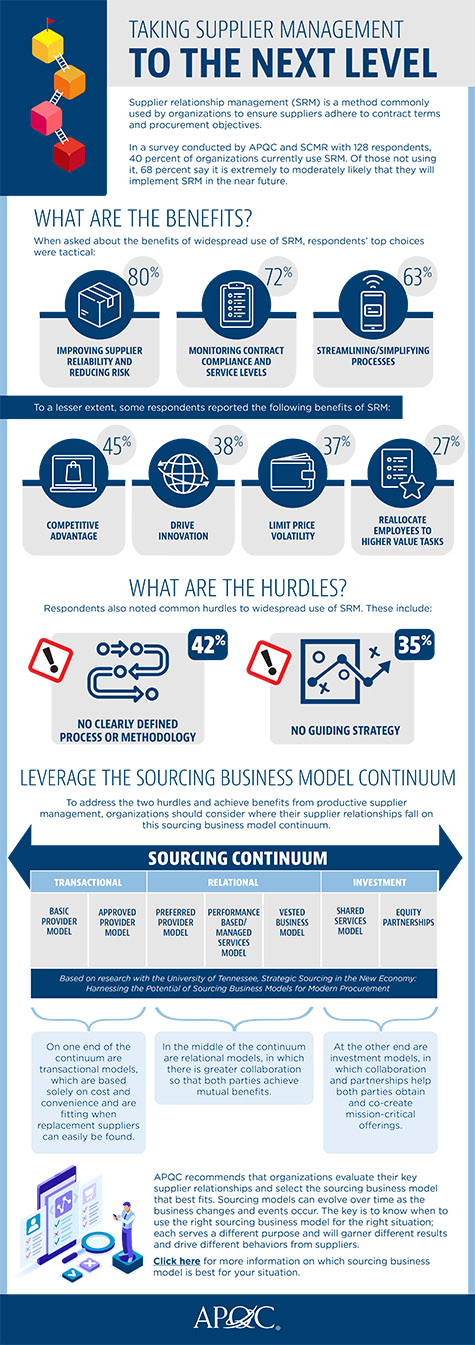
Supplier relationship management (SRM) is a method commonly used by organizations to ensure suppliers adhere to contract terms and procurement objectives.
In a survey conducted by APQC and SCMR with 128 respondents, 40 percent of organizations currently use SRM. Of those not using it, 68 percent say it is extremely to moderately likely that they will implement SRM in the near future.
Click here for the full size infographic.
APQC recommends that organizations evaluate their key supplier relationships and select the sourcing business model that best fits. Sourcing models can evolve over time as the business changes and events occur. The key is to know when to use the right sourcing business model for the right situation; each serves a different purpose and will garner different results and drive different behaviors from suppliers.
SC
MR

Latest Supply Chain News
- NextGen Supply Chain Conference unveils agenda focused on AI, execution and the future of leadership
- From fragmented negotiations to coordinated negotiation performance: an AI-enabled approach
- Supply chain resilience isn’t a data problem; it’s a judgment problem
- Beyond the hype: Building flexible and scalable supply chains in a VUCA world
- Why your supply chain risk management plan will fail
- More News
Latest Resources
 Explore
Business Management News
- Why companies blame the wrong supplier … and miss the real failure
- NextGen Supply Chain Conference unveils agenda focused on AI, execution and the future of leadership
- Supply chain resilience isn’t a data problem; it’s a judgment problem
- Beyond the hype: Building flexible and scalable supply chains in a VUCA world
- Why your supply chain risk management plan will fail
- What options do you really have? Shaping the supply chain resilience funnel
- More Business Management
Latest Business Management Resources
Subscribe

Supply Chain Management Review delivers the best industry content.

Editors’ Picks



