
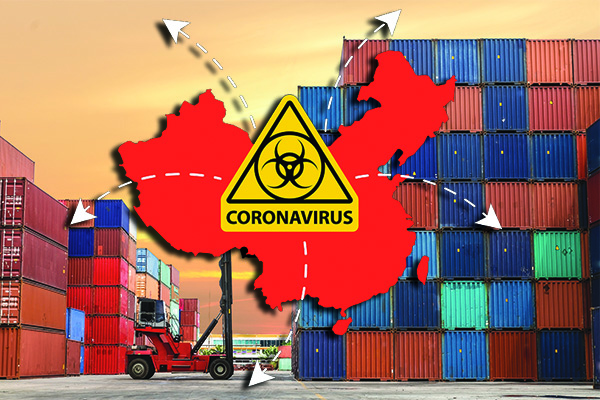
The recent outbreak of COVID-19 in South China’s Yantian Port is causing yet another backlog in global supply chains, notes Dun & Bradstreet, a leading global provider of business decisioning data and analytics.
Brian Alster, General Manager, Third-Party Risk & Compliance, Dun & Bradstreet, recently shared information on the industries, suppliers and materials that will suffer in Europe, the United States/Canada and Asia Pacific.
“In each region, major materials that are already experiencing shortages will continue to be impacted including metals, plastic, and food - further stalling the movement of goods and impacting prices,” he says
In Europe:
- Top countries impacted by reduced capacity at Yantian International Container Terminals (YICT) include: the United Kingdom, the Netherlands, Germany, Spain, France, Belgium, Italy, Poland, Sweden, and Denmark.
- The top 10 materials found in shipments from YICT to Europe include: audiovisual equipment, furniture and bedding, toys and games, mechanical appliances, footwear, clothing, steel, ceramic, metals, and cutlery and related metal products.
- The top 10 industries impacted by these delays include: general retail, food retailers, wholesale trade, apparel, electrical equipment and components, engineering services, industrial and commercial machinery and equipment, furniture, building materials and hardware, and construction.
In US/Canada:
- The top 10 materials found on shipments from YICT to the US/Canada include: furniture and bedding, toys and games, audiovisual equipment, mechanical appliances, plastics, steel, metals, textiles, ceramics, and leather products.
- The top 10 industries impacted by these delays include: general retail, furniture, wholesale trade, automotive dealers, apparel, engineering services, industrial and commercial machinery, and equipment, building materials and hardware, electronic equipment and components, and fabricated metal products.
In the Asia-Pacific:
- Top countries impacted by reduced capacity at YICT include: Australia, New Zealand, Malaysia, Bangladesh, Vietnam, and South Korea.
- The top 10 materials found on shipments from YICT to Asia-Pacific nations include: plastics, footwear, audiovisual equipment, apparel, paper and paperboard, furniture, steel, leather, mechanical appliances, and cutlery and related metal products.
- The top 10 industries impacted by these delays include: general retail, furniture, wholesale trade, food retailers, electrical equipment and components, building materials and hardware, communications, apparel, construction, and textiles.
- The top 10 affected supplier industries in China include: wholesale trade, furniture, building materials and hardware, electrical equipment and components, apparel, engineering services, industrial and commercial machinery and equipment, metal products, food retailers, and stone/clay/glass/concrete products.
As always, we hope that this market intelligence will help SCMR readers prepare for “Peak Season,” and will endeavor to sound out other industry analysts for their perspective on major disruptions like this one.
On a final note, we would like acknowledge that Dun & Bradstreet was recently awarded the CIPS corporate ethics mark after the company’s Global Sourcing & Procurement staff completed the necessary trainings in supply chain management.
Well done.
SC
MR

Latest Supply Chain News
- The biggest barrier to AI in supply chains isn’t technology
- Rebuilding a planning function around the physical world
- Why companies blame the wrong supplier … and miss the real failure
- NextGen Supply Chain Conference unveils agenda focused on AI, execution and the future of leadership
- From fragmented negotiations to coordinated negotiation performance: an AI-enabled approach
- More News
Latest Podcast
 Explore
Business Management News
- Why companies blame the wrong supplier … and miss the real failure
- NextGen Supply Chain Conference unveils agenda focused on AI, execution and the future of leadership
- Supply chain resilience isn’t a data problem; it’s a judgment problem
- Beyond the hype: Building flexible and scalable supply chains in a VUCA world
- Why your supply chain risk management plan will fail
- What options do you really have? Shaping the supply chain resilience funnel
- More Business Management
Latest Business Management Resources
About the Author
Patrick Burnson, Executive Editor

Patrick is a widely-published writer and editor specializing in international trade, global logistics, and supply chain management. He is based in San Francisco, where he provides a Pacific Rim perspective on industry trends and forecasts. He may be reached at his downtown office: [email protected].
Follow SCMR on social media.
@SupplyChainManagementReview on Facebook
@SCMR on Twitter
SCMR on Linkedin
Subscribe

Supply Chain Management Review delivers the best industry content.

Editors’ Picks



