
Resilience was the watchword of a keynote panel at the recent ASCM CHAINge conference, but the conversation quickly revealed that true resilience is about more than technology and tactics—it’s about recognition at the very top. Former U.S. Commerce Secretary Gina Raimondo delivered the sharpest reminder, noting that supply chains must be elevated into the boardroom as strategic imperatives and not relegated to the back office where they have traditionally been.
From tariffs and infrastructure investment to collaboration and transparency, the panel explored how leaders across sectors are grappling with disruption that shows no sign of slowing.
CNBC’s Lori Ann LaRocco led the high-profile discussion that featured Craig Jones, chief supply chain officer at On Running; Tanja Dysli, chief supply chain officer for IKEA U.S.; and Alex LeWei, president of COSCO Shipping North America, as well as Raimondo.
LaRocco kicked off the panel by reminding the audience that supply chains are more than technology and transactions. “It is the people and relationships that define resilience,” she said.
Gina Raimondo, former U.S. Secretary of Commerce under President Joe Biden, noted that supply chains must be treated as strategic imperatives by organizations.
“We need to get supply chain elevated into the boardroom,” she said. “Too many boards still think of supply chain as a back-office function. It is not. It is a strategic risk and opportunity.”
Joining LaRocco and Raimondo on the panel was Craig Jones, chief supply chain officer at On Running; Tanja Dysli, chief supply chain officer for IKEA U.S.; and Alex LeWei, president of COSCO Shipping North America.
Jones pointed to silos as an issue, saying the industry needs to better collaborate. That theme—collaboration—permeated much of the discussion, from its role in trade and tariffs, to how it can aid partnerships that will elevate the industry.
Policy, tariffs, and the reality of uncertainty
Much of the discussion focused on geopolitical pressures and trade policy. Raimondo warned of the potential fallout from pending court rulings regarding tariffs.
“If the Supreme Court upends tariff authority, it would be chaos. Like the chaos that you’re experiencing now,” she told the audience.
For companies like IKEA, scenario planning has become essential, as Dysli explained.
“Our board is very engaged, and we’re doing constant scenario planning. We can’t control policy, but we can control how prepared we are for different outcomes,” she said.
At the same time, IKEA is also focused on the consumer and it has been shifting its strategies in response.
“We have to prioritize customer impact, and sometimes that means finding opportunities in different markets,” Dysli said. “For us, that meant more B2B kitchen sales during the pandemic.”
Jones emphasized innovation in manufacturing and relocation strategies, noting that “onshoring and nearshoring footwear is not simple. We’re facing labor shortages, higher costs, and quality challenges. But innovation in automation and design makes it possible.”
Shipping, infrastructure, and the trade outlook
LeWei underscored the long-term nature of shipping investments, saying that billions of dollars is being invested in terminals with vessel planning and trade lanes taking years to develop. One trade he noted was a shift of global trade to more fragmented, regionalized flows shaped by bilateral trade agreements.
The challenge for U.S.-based companies, though, is more complex, as Raimondo said the U.S. lags in infrastructure investment.
“We’re decades behind other countries in investing in ports,” she said. “Our customs technology is outdated. If we want resilient supply chains, we need resilient infrastructure.”
Partnerships and transparency
The conversation repeatedly returned to the importance of trust between the public and private sectors, as all the speakers noted the role government can play in supporting business. Raimondo said:
“The private sector runs supply chains. Government is here to support. But trust can’t just be built in a crisis. It has to be constant,” Raimondo said.
The panelists agreed that a return to pre-pandemic normal is not on the agenda for the industry.
“The mistake is clinging to the idea of ‘normal.’ Disruptions are the new normal,” Dysli said bluntly.
SC
MR

More Global Trade Risks
- Caught between a rock and a hard place: Mapping your supply chain
- Importers don’t need more information—they need less noise
- AI is creating new market access barriers to trade
- Trade wars won’t break supply chains. But the consumer impact will trouble brands
- Boardrooms, tariffs, and trust: Supply chains at a crossroads
- More Global Trade Risks
What's Related in Global Trade Risks
 Explore
Topics
Procurement & Sourcing News
- Why companies blame the wrong supplier … and miss the real failure
- NextGen Supply Chain Conference unveils agenda focused on AI, execution and the future of leadership
- From fragmented negotiations to coordinated negotiation performance: an AI-enabled approach
- Supply chain resilience isn’t a data problem; it’s a judgment problem
- Why your supply chain risk management plan will fail
- When component verification becomes operational
- More Procurement & Sourcing
Latest Procurement & Sourcing Resources
About the Author
Brian Straight, SCMR Editor in Chief
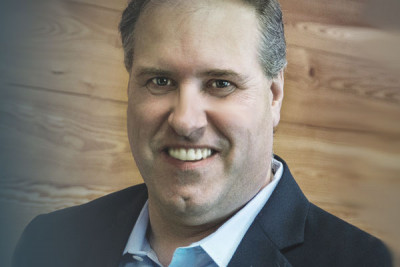
Brian Straight is the Editor in Chief of Supply Chain Management Review. He has covered trucking, logistics and the broader supply chain for more than 15 years. He lives in Connecticut with his wife and two children. He can be reached at [email protected], @TruckingTalk, on LinkedIn, or by phone at 774-440-3870.
Follow SCMR on social media.
@SupplyChainManagementReview on Facebook
@SCMR on Twitter
SCMR on Linkedin
Subscribe

Supply Chain Management Review delivers the best industry content.

Editors’ Picks



