The closure of the Strait of Hormuz is exposing how deeply modern supply chains depend on petroleum-based inputs, creating cascading disruptions across transportation, agriculture, plastics, chemicals, semiconductors, and global consumer markets.
A BBC report highlighted how Mexican call centers staffed by deported former gang members are providing outsourced services to U.S. companies while offering workers a pathway to rehabilitation, stable employment, and social reintegration.
To ensure precision and efficiency, supply chain organizations look for the right measures to track their performance. These efforts focus on identifying key performance indicators for standard supply chain functions such as planning, procurement, manufacturing, and logistics.
AI-powered drone automation is helping warehouses reduce greenhouse gas emissions, improve inventory accuracy, and lower operational waste, demonstrating how inventory management can become a meaningful driver of supply chain sustainability.
College football superfans are fully invested, and their dedication elevates the sport. What if we could create that same enthusiasm, loyalty, and management commitment in the boardroom?
Benchmark supply chains are shifting from internally driven planning to a Right-to-Left model synchronized with actual consumption. The result: lower inventory, stronger service, and measurable gains in total value.
Monday, September 15, 2025 · Dr. María Jesús Sáenz, Dr. Jaime Macías Aguayo, Javiera Arancibia and Fernanda Esparza
Companies can reduce planning delays and improve service levels by using a hybrid metaheuristic approach, achieving near-optimal solutions in minutes instead of hours.
AI can enhance data analysis but it cannot fix the fundamental challenges of Big Data—such as volume, variety, velocity, veracity, and relevancy—that must be addressed before AI can succeed.
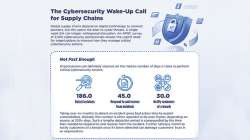
Most organizations are underinvesting in supply chain cybersecurity, leaving them slow to detect and respond to threats that can disrupt global operations.
Gartner research outlines four critical steps chief supply chain officers must take to establish themselves as credible digital leaders, from setting a bold transformation vision to fostering collaboration and agility across the enterprise.
AI can help cities, counties and states collect taxes from businesses purposely trying to avoid compliance, lowering costs for all businesses in the process.
Friday, August 15, 2025 · Massachusetts Institute of Technology
New research defines a clear, four-phase framework for the U.S. truckload market cycle and develops forecasting models using spot and contract rates alongside macroeconomic and industry indicators, enabling stakeholders to better anticipate and respond to capacity-demand shifts.
To date, U.S. Customs has collected about $150 billion in tariff money, and by the end of 2025, the total is expected to be well over $300 billion. We import a startling amount of goods into the U.S., and all these goods are being taxed. But where does all that money go?
Only 26% of companies are achieving real value from AI—and according to a global BCG survey, the key to success isn’t algorithms, but prioritizing people and processes over technology alone.
To shape their future, procurement teams must position themselves as strategic partners that drive customer value and contribute to the organization’s overall success. Here are five priority areas to help do that.
Thursday, July 10, 2025 · University of Tennessee Global Supply Chain Institute
From optimizing structure and spend to enabling ESG and innovation, it’s time to rethink traditional roles and embrace collaborative, capability-driven strategies to unlock future-ready performance.
Supply chain planning is in need of a reboot. Planners are increasingly expected to take a leading role in managing complex cross-functional processes, driving automation, and building more agile supply chains. As a result, the competencies that today’s planning…
Tuesday, July 1, 2025 · Massachusetts Institute of Technology
Despite advances, developing workplace systems that facilitate AI-human working relationships is still in its early stages. Companies need to invest in systems that enable robots and humans to assume more sophisticated roles gradually.
New research findings reveal AI and automation are becoming the backbone of omnichannel supply chains as companies move from capability building to real-time, profitable execution.
Tech leaders must move beyond ethics debates and embrace accountability, making decisions that balance business responsibility, national interests, and supply chain realities.
The rules of supply chain network design (SCND) have fundamentally shifted. In an era where volatility is the only constant, a supply chain modeled solely for stability is no…
Supply chains are expanding the use of AI across functions, and that expansion means more data storage and more computation, which all require more electricity use and…
As tariffs, volatility, and compressed launch cycles expose the limits of Tier 1 oversight, procurement leaders are leveraging AI-driven Tier 2 visibility to cut upstream costs,…
Don’t miss out on the best in supply chain. Get premium
resources and in-depth, comprehensive feature articles written by the industry's top experts – delivered.