
Sorry, but your login has failed. Please recheck your login information and resubmit. If your subscription has expired, renew here.
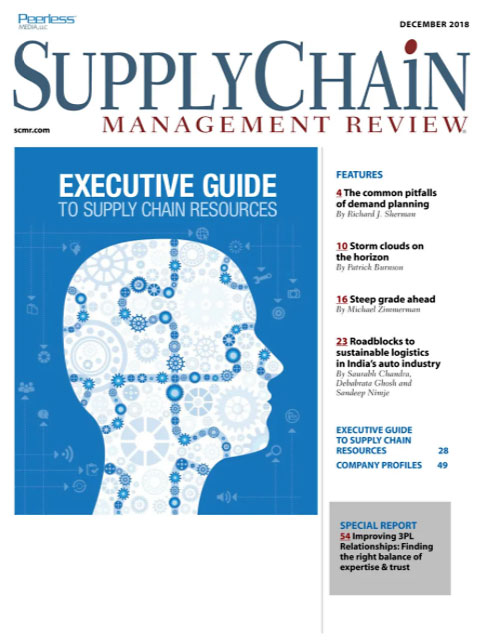
December 2018
It’s December and time once again for our annual Executive Guide to Supply Chain Resources. This is a comprehensive guide to services, products and educational opportunities targeted specifically to supply chain professionals. As with years past, we’re also featuring several articles we trust will offer food for thought in your supply chain in the coming year. Browse this issue archive.Need Help? Contact customer service 1-508-503-1313 More options
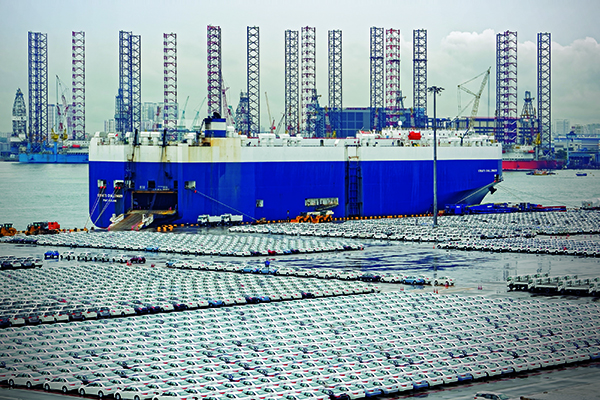
A study carried out by the Malaysia Institute for Supply Chain Innovation (MISI) and the Indian Institute of Management suggests that the industry can use waterborne transportation to deliver more autos. Strategies such as encouraging more collaboration between stakeholders and targeting investments in water infrastructure could facilitate a shift from road to water modes. There are lessons that other developing countries could learn from the research findings.
Untapped potential
In 2017, roughly 4.6 million passenger and commercial automobiles were produced in India, out of which 3.7 million were sold domestically, according to the Society of Indian Automobile Manufacturers. The domestic industry is scattered across the country, but there are at least three main clusters of activity: One near the capital city of Delhi, another in the southern city of Chennai and a third cluster in the western states of Maharashtra and Gujarat.
About 95% of the autos produced are delivered through roadways on specially designed trucks, reports the SME Times, with the remaining units delivered through railways as long-distance cargo. Waterway-based logistics solutions are almost non-existent, and there have been few trials of the coastal shipping mode for the transportation of autos.

This complete article is available to subscribers only.
Log in now for full access or start your PLUS+ subscription for instant access.
SC
MR
Sorry, but your login has failed. Please recheck your login information and resubmit. If your subscription has expired, renew here.
December 2018
It’s December and time once again for our annual Executive Guide to Supply Chain Resources. This is a comprehensive guide to services, products and educational opportunities targeted specifically to supply chain… Browse this issue archive. Access your online digital edition. Download a PDF file of the December 2018 issue.A study carried out by the Malaysia Institute for Supply Chain Innovation (MISI) and the Indian Institute of Management suggests that the industry can use waterborne transportation to deliver more autos. Strategies such as encouraging more collaboration between stakeholders and targeting investments in water infrastructure could facilitate a shift from road to water modes. There are lessons that other developing countries could learn from the research findings.
Untapped potential
In 2017, roughly 4.6 million passenger and commercial automobiles were produced in India, out of which 3.7 million were sold domestically, according to the Society of Indian Automobile Manufacturers. The domestic industry is scattered across the country, but there are at least three main clusters of activity: One near the capital city of Delhi, another in the southern city of Chennai and a third cluster in the western states of Maharashtra and Gujarat.
About 95% of the autos produced are delivered through roadways on specially designed trucks, reports the SME Times, with the remaining units delivered through railways as long-distance cargo. Waterway-based logistics solutions are almost non-existent, and there have been few trials of the coastal shipping mode for the transportation of autos.
SC
MR

Latest Supply Chain News
- Innovators Netstock, Pickle Robot win NextGen Solution Provider awards
- Bigger trucks versus broken bridges and roads
- From salon to dock door: Repurposing scheduling software for inbound flow
- The biggest barrier to AI in supply chains isn’t technology
- Rebuilding a planning function around the physical world
- More News
Latest Podcast
 Explore
Topics
Procurement & Sourcing News
- Innovators Netstock, Pickle Robot win NextGen Solution Provider awards
- From salon to dock door: Repurposing scheduling software for inbound flow
- The biggest barrier to AI in supply chains isn’t technology
- Rebuilding a planning function around the physical world
- Why companies blame the wrong supplier … and miss the real failure
- NextGen Supply Chain Conference unveils agenda focused on AI, execution and the future of leadership
- More Procurement & Sourcing
Latest Procurement & Sourcing Resources
Subscribe

Supply Chain Management Review delivers the best industry content.

Editors’ Picks



