
Sorry, but your login has failed. Please recheck your login information and resubmit. If your subscription has expired, renew here.
For years, procurement has been defined by what it saved. It was a cost control function designed to ensure needed materials or services were acquired at the least cost possible. But in 2026, procurement is no longer being viewed that same way. Today, procurement is being defined by what it can enable.
Procurement is no longer a back-office function, but rather one of the most important strategic levers inside the enterprise. The traditional model of aggregating spend, driving down costs, and consolidating suppliers was built for a more stable world. But that world no longer exists. Tariffs, geopolitical uncertainty, and supply chain fragmentation have fundamentally changed the equation. Procurement teams are moving away from pure aggregation toward more balanced, risk-aware sourcing strategies that prioritize continuity alongside cost.
SC
MR
Sorry, but your login has failed. Please recheck your login information and resubmit. If your subscription has expired, renew here.
For years, procurement has been defined by what it saved. It was a cost control function designed to ensure needed materials or services were acquired at the least cost possible. But in 2026, procurement is no longer being viewed that same way. Today, procurement is being defined by what it can enable.
Procurement is no longer a back-office function, but rather one of the most important strategic levers inside the enterprise. The traditional model of aggregating spend, driving down costs, and consolidating suppliers was built for a more stable world. But that world no longer exists. Tariffs, geopolitical uncertainty, and supply chain fragmentation have fundamentally changed the equation. Procurement teams are moving away from pure aggregation toward more balanced, risk-aware sourcing strategies that prioritize continuity alongside cost.
What’s emerging instead is a function that sits much closer to the center of decision-making. Procurement is now being asked to help answer questions that go far beyond price. Where should we source? How exposed are we to disruption? Which suppliers are critical to our future, not just our margins?
You see this most clearly in how organizations are approaching supplier relationships. Procurement teams are digging deeper into tier 2 suppliers to better understand risk, cost drivers, and performance across the full network. That level of visibility would have been considered excessive a decade ago. Today, it’s becoming table stakes.
The more forward-looking organizations are also beginning to realize that suppliers are not just sources of cost—they are sources of capability. Innovation, speed, and flexibility are increasingly coming from the supplier ecosystem. Procurement is the function best positioned to unlock that value, if it is empowered to do so.
Leadership shouldn’t be asking procurement to do more, and procurement shouldn’t be doing more. Instead, the question posed should be how the work is being accomplished. Spend less time chasing incremental savings and more time shaping sourcing strategy, and you will find that supplier collaboration follows. Aligning your goals with the capabilities of your suppliers is win for everyone. And the side benefit is that these open conversations build the trust needed to develop what all C-suites are looking for today: resiliency. An engaged supplier is much more willing to work with you in times of need.
The companies that get this right are treating their suppliers as strategic partners, not as transactions. In 2026, the question is not whether procurement can reduce costs—we know it can. The question is whether it can help the business navigate uncertainty, move faster, and compete more effectively.
Increasingly, the answer is yes.
SC
MR

More Procurement Trends
- Procurement’s moment has arrived
- How efficient is your procurement process?
- Unlocking better negotiation outcomes: How after-action reflections can transform supply chain performance
- Agentic AI is turning long-tail purchase orders into true cost savings
- The $4 million procurement gap
- More Procurement Trends
 Explore
Topics
Procurement & Sourcing News
- Why companies blame the wrong supplier … and miss the real failure
- NextGen Supply Chain Conference unveils agenda focused on AI, execution and the future of leadership
- From fragmented negotiations to coordinated negotiation performance: an AI-enabled approach
- Supply chain resilience isn’t a data problem; it’s a judgment problem
- Why your supply chain risk management plan will fail
- When component verification becomes operational
- More Procurement & Sourcing
Latest Procurement & Sourcing Resources
About the Author
Brian Straight, SCMR Editor in Chief
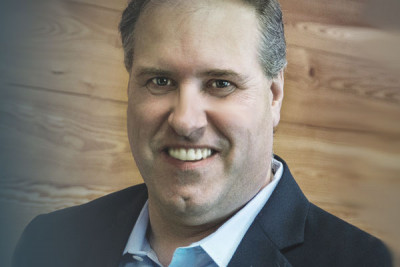
Brian Straight is the Editor in Chief of Supply Chain Management Review. He has covered trucking, logistics and the broader supply chain for more than 15 years. He lives in Connecticut with his wife and two children. He can be reached at [email protected], @TruckingTalk, on LinkedIn, or by phone at 774-440-3870.
Follow SCMR on social media.
@SupplyChainManagementReview on Facebook
@SCMR on Twitter
SCMR on Linkedin
Subscribe

Supply Chain Management Review delivers the best industry content.

Editors’ Picks



