
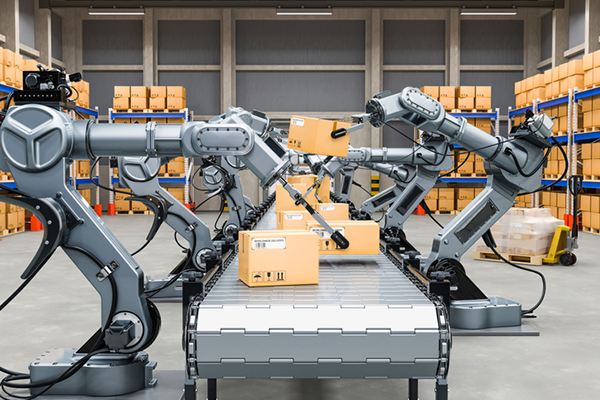
You're in luck. Gary Ritzmann, director of operations at Rochester Drug Cooperative, has done just that. Better yet, his first picking robot has already paid for itself.
A little more than two years since launch, Ritzmann says he thinks there are “thousands and thousands” of other DCs that could easily benefit from the increased accuracy and efficiency of picking robots in a tight labor market. Better yet, Ritzmann says it only takes a couple of days to integrate the robot with existing operations.
Along with John Cameron, vice president of software systems for IAM Robotics, Ritzmann will detail what it takes to make a picking robot part of the DC team at the upcoming NextGen Supply Chain Conference.
The event is set for April 16 and 17 at the Chicago Athletic Association. This session is slated from 2:45 – 3:15 pm on the 16th. You can register here

While you will want to hear the two experts in person, here's a sneak preview of what they will have to say.
“We know we are well ahead of the curve of mobile piece-picking robots moving into DCs. But not by much,” says Ritzmann. “Fact is, picking robots are both practical and easy to integrate right now. There's no need to wait.”
Today, Rochester Drug has two robots picking orders on the second shift (when all picking gets done at the DC). The first robot worked solo for about 18 months before the second was added. Both are now picking more than 100 items an hour from shelving. That's slightly more than the standard rate for human pickers at the facility.
The original addition of the robot was easy. Ritzmann goes so far as to say integration of the robot to the company's mezzanine operation was easier than going from shelving to pick-to-light with human pickers. Some adjustments had to be made to ensure items were positioned on the shelving so the robot could make the pick. But in most cases, that was little more than good housekeeping during replenishment.
Integration with information systems was straightforward too, says Ritzmann. “It was a matter of a couple of hours not a couple of weeks like expected,” he adds.
Today, the robots are considered to be part of the team by associates in the facility. But it did take more time to get to that point. “We didn't do as good a job upfront as we should have even though we promised from the beginning that no one would be let go. And that's still the case,” he says. “The key was a couple of team members who stepped forward and decided working with the robot would enhance their skills and value to the company,” he adds.
Going forward, Rochester Drug expects to add more robots as they are needed. “We're well on our way. And I expect many other DCs to do the same,” says Ritzmann.
SC
MR

More Robotics
- NextGen Supply Chain Conference unveils agenda focused on AI, execution and the future of leadership
- Beyond the hype: Building flexible and scalable supply chains in a VUCA world
- Technology isn’t strategy
- Wayfair executive to share lessons from building a tech-driven delivery network in NextGen Keynote
- The real reason supply chain tech ROI falls short
- DHL Supply Chain bets on data foundations, robotics, and agentic AI to drive growth
- More Robotics
Latest Resources
 Explore
Topics
Software & Technology News
- NextGen Supply Chain Conference unveils agenda focused on AI, execution and the future of leadership
- From fragmented negotiations to coordinated negotiation performance: an AI-enabled approach
- Beyond the hype: Building flexible and scalable supply chains in a VUCA world
- Managing human and AI teams across the supply chain
- The AI-empowered supply chain leader
- Technology isn’t strategy
- More Software & Technology
Latest Software & Technology Resources

Subscribe

Supply Chain Management Review delivers the best industry content.

Editors’ Picks



