
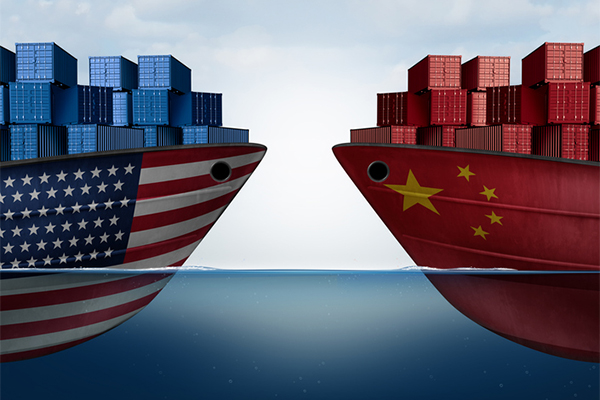
A “systemic cultural difference” in trade negotiations may be keeping global supply chain managers on edge next year, maintains one prominent political expert.
“U.S.-China Relations: Reflections on a Gathering Storm,” hosted by the World Affairs Council in San Francisco, featured David M. Lampton, an authority on Sino-American relations at Stanford University.
“Currently, we have a president who is a maximalist, who wants everything,” says Lampton. “While at the same time, the Chinese are reluctant to negotiate a deal unless they have a map of the other guy's priorities. Unfortunately, America is a demand-making machine.”
Furthermore, says Lampton, U.S. policy makers keep too many issues on the table. He posits the following questions:
“Do we want to oppose a ‘One China' position, or champion human rights in Hong Kong or concentrate on the trade deficit. Or should our real focus be on establishing strong security protocols that will keep China in check?”
He contends that engagement has weakened so precipitously in the last several years that it may lead to “mounting frictions.”
“Yet, American companies invested in China are still making money, as goods are exported worldwide,” he says. “The global trade balance in Asia has dropped while China's has risen. So the president has overreacted and the consequence in punitive to U.S. consumer.”
Lampton observed that U.S. agricultural exports are especially vulnerable to our best interests.
“Sobeans, for example, are crucial to farms in Iowa. If exports fall in double-digit numbers our government will have to drive up subsidies. The current policy is not being guided by sound economics.”
While the Trump administration's tariff policy “may not in concordance with reality,” Lampton believes China's acquisition of U.S. intellectual property is unacceptabl.
“That's a legitimate grievance,” he says. “We should talk more about reciprocity.”
Finally, Lampton maintains that there's new research that indicating that there is “a convergence of opinion on China among Republicans and Democrats.
“Our security relationship has deteriorated,” he concludes. “Before the Cultural Revolution, China was not a threat. But its 4.9 compound percent annual growth has enabled them to have a rapidly building military budget.”
SC
MR

Latest Supply Chain News
- From salon to dock door: Repurposing scheduling software for inbound flow
- The biggest barrier to AI in supply chains isn’t technology
- Rebuilding a planning function around the physical world
- Why companies blame the wrong supplier … and miss the real failure
- NextGen Supply Chain Conference unveils agenda focused on AI, execution and the future of leadership
- More News
Latest Podcast
 Explore
Business Management News
- Innovators Netstock, Pickle Robot win NextGen Solution Provider awards
- Bigger trucks versus broken bridges and roads
- From salon to dock door: Repurposing scheduling software for inbound flow
- The biggest barrier to AI in supply chains isn’t technology
- Rebuilding a planning function around the physical world
- Why companies blame the wrong supplier … and miss the real failure
- More Business Management
Latest Business Management Resources
About the Author
Patrick Burnson, Executive Editor

Patrick is a widely-published writer and editor specializing in international trade, global logistics, and supply chain management. He is based in San Francisco, where he provides a Pacific Rim perspective on industry trends and forecasts. He may be reached at his downtown office: [email protected].
Follow SCMR on social media.
@SupplyChainManagementReview on Facebook
@SCMR on Twitter
SCMR on Linkedin
Subscribe

Supply Chain Management Review delivers the best industry content.

Editors’ Picks



