
As noted in an earlier blog post, global supply chain managers threatened by Chinese government-promoted boycotts are being encouraged to stand firm in their opposition to forced labor.
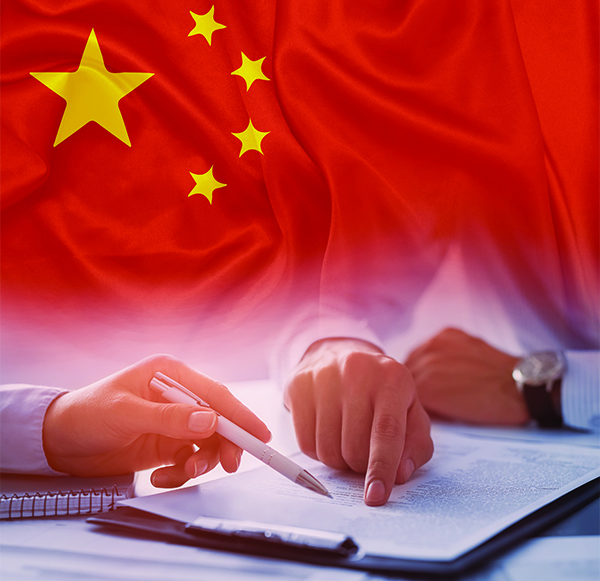
Regarding this week’s furor over Xinjiang cotton— announcements from several foreign textile and garment companies, including H&M, that they would stop using Xinjiang cotton and call for a boycott of the product due to the forced labor of Uyghurs, hundreds of thousands of whom pick cotton under apparently coercive conditions.
Brian Glick, founder and CEO of Chain.io, had some comments regarding supplier compliance issues that he wanted to share:
“Xinjang cotton is only the tip of the iceberg. Forced labor, conflict minerals, the seafarer crisis, brands are under pressure from governments, socially aware consumers, NGOs and must be fully aware of their upstream supply chains because the standard of care is changing,” said Brian Glick, founder and CEO of Chain.io. “It used to be that you could say, I checked on my supplier and they were clean.
But Glick maintains that now there is an assumption in the marketplace (and more and more by the government) that brands must be aware of the full lifecycle of their product from seed-to-landfill.
“There’s still a massive gap between that expectation and the way companies manage their data,” he says. “They’re putting consultants and employees in place to manually audit things, but that only goes so far. In many companies there is a big gulf between the periodic audit process and the operational supply chain, and they don’t have the ability to actually stop purchasing, shipping, or selling immediately; and in the rare case that they do, they certainly can’t adapt their supply chains to a new sourcing model overnight.”
Glick concludes that companies must accept that trade compliance and social compliance are no longer separate from supply chain execution:
“Any solution they put in place must be fully integrated into their systems and purchasing. It can’t be a ‘side’ group or something that sits in a different department.”
SC
MR

Latest Supply Chain News
- 4 moves supply chains must make as AI triggers a memory supply shock
- Innovators Netstock, Pickle Robot win NextGen Solution Provider awards
- Bigger trucks versus broken bridges and roads
- From salon to dock door: Repurposing scheduling software for inbound flow
- The biggest barrier to AI in supply chains isn’t technology
- More News
Latest Podcast
 Explore
Business Management News
- Innovators Netstock, Pickle Robot win NextGen Solution Provider awards
- Bigger trucks versus broken bridges and roads
- From salon to dock door: Repurposing scheduling software for inbound flow
- The biggest barrier to AI in supply chains isn’t technology
- Rebuilding a planning function around the physical world
- Why companies blame the wrong supplier … and miss the real failure
- More Business Management
Latest Business Management Resources
About the Author
Patrick Burnson, Executive Editor

Patrick is a widely-published writer and editor specializing in international trade, global logistics, and supply chain management. He is based in San Francisco, where he provides a Pacific Rim perspective on industry trends and forecasts. He may be reached at his downtown office: [email protected].
Follow SCMR on social media.
@SupplyChainManagementReview on Facebook
@SCMR on Twitter
SCMR on Linkedin
Subscribe

Supply Chain Management Review delivers the best industry content.

Editors’ Picks



