
Every year, the Association for Supply Chain Management (ASCM) brings together a diverse group of practitioners, consultants, and academics to identify the biggest forces shaping supply chains. This group offers its insights, and while many of the items that make the Top 10 trends each year are not a surprise, it offers a glimpse of what those on the ground are living every day.
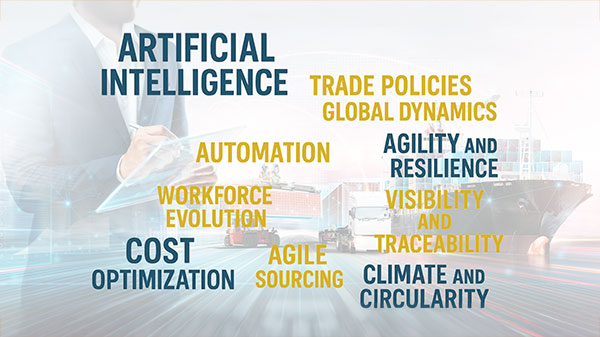
The Top 10 Supply Chain Trends for 2026, released at the recent ASCM CHAINge conference in Columbus, Ohio, highlight how technology, geopolitics, workforce dynamics, and sustainability will intersect to reshape strategy.
“These are actually made by supply chain practitioners and peers. They’re grounded in reality. They’re looking at what’s going on in their space,” explained Matt Talbert, senior manager of research at ASCM, as he and Armand Van Oostrom, senior lecturer at The Hague University of Applied Sciences, teed up the presentation.
1. Artificial intelligence: From optional to essential
Not surprisingly, AI tops the list, reflecting its rapid evolution. By 2027, ASCM expects AI to be central to supply chain strategy and by 2032 it will be indispensable.
“AI is not going anywhere and it’s going to be an essential skill,” Talbert noted. “It’s going to have a major impact on forecasting, on planning … maybe there’s a climate event that impacts the data. It’s going to be working with you more as a co-pilot.”
In a separate interview with Supply Chain Management Review, ASCM CEO Abe Eshkenazi reinforced this point, stressing that technology and talent must evolve together, and AI is particularly useful in scenario planning as businesses try to navigate the current environment.
“I don’t want to do scenario planning without AI today because of the mass amount of information and the disparate inputs that you need to account for,” he said. “[It] allows the technology to do what it does and allows the people to do what they do.”
2. Trade policies and global dynamics: Tariffs that stick
The second trend reflects continued uncertainty around global trade. Tariffs, once enacted, tend to linger and force companies to rewire sourcing and production.
“It’s harder to get the tariffs abolished because we haven’t seen this kind of situation before,” van Oostrom said. “Some organizations have to act quicker. In Brussels, we had a firm that imported wood from Canada to make furniture in Vietnam and then imported back into the U.S. and they were devastated by the tariffs.”
Eshkenazi, taking the practitioner’s perspective in tariffs, noted that they are “not a supply and demand issue … this is purely a tax, and again, it’s to rebalance or to reshift the supply chain footprint.” He went to say the timeframes of the action is frustrating for those in the industry, as many tariffs are being implemented quickly, revised, revised again, and in some cases exempted.
“It took 30-plus years to build China into the manufacturing powerhouse it is,” Eshkenazi said. “We’re not going to undo it in quarters.”
3.Automation: Scaling across warehouses and logistics
Automation is accelerating as robotics, AI, and autonomous vehicles are deployed across warehouses, manufacturing, and last-mile delivery. Robotic picking systems are streamlining operations, while drones and self-driving trucks promise 20% to 40% reductions in delivery costs in certain markets.
4. Agility and resilience: Absorbing punches, learning to dance
Resilience and agility are long-standing priorities, but ASCM stresses they must now be seen as complementary. Resilience is the ability to recover while agility is the ability to avoid disruption altogether, the speakers explained.
Van Oostrom used a boxing metaphor to illustrate. “Resilience is being able to come back after you’ve been punched. Agility is the capability to dance and get yourself in a better position.”
5. Workforce evolution: Closing the digital skills gap
The workforce is an issue that is close to Eshkenazi’s heart. He said it was nice to see it move up the Top Trends list this year.
“I think a recognition that your technology spend has to be matched by your talent development spend, and we’re not there yet,” he said.
Eshkenazi noted a disconnect that exists in many companies as they rapidly invest in technology.
“If your number one asset is your employees, why are you not investing in your employees as your number one asset?,” he asked. “Technology with knowledgeable capable employees is a winning formula.”
During the Top Trends presentation, Van Oostrom noted that technology continues to evolve faster than companies can upskill their employees, creating more challenges for firms.
6. Visibility and traceability: End-to-end clarity
Greater end-to-end visibility is now table stakes, with blockchain, digital twins, and real-time location intelligence enabling companies to monitor flows across multiple tiers. While tier one suppliers are now highly visible, though, companies still struggle with downstream visibility, hence the visibility taking the sixth spot on the list.
“If you don’t know where the issue is, how are you going to resolve it?” van Oostrom said. “We know our tier one suppliers and tier one customers rather well … but anything beyond is still less explored.”
Eshkenazi sees progress in this area, accelerated by the pandemic and the need to have more visibility. “We suffered in the pandemic from visibility, transparency, and traceability. We did not know who or what was in our supply chains,” he said. “Over the past three to four years, companies have worked extraordinarily hard to make sure they know everything and everybody in their supply chains.”
7. Cybersecurity: Defending a larger attack surface
As digitization has created more connectivity, it has also opened more doors for cybercriminals to walk through. Every partner and every node in a supply chain is a potential weak link, van Oostrom warned. “It’s an arms race…we will have to make sure that the entire link doesn’t have the weak spots,” he said.
8. Cost optimization: Beyond cost cutting
While cost efficiency remains critical, the conversation is shifting from pure cost-cutting to value creation, van Oostrom and Talbert said. Companies are reassessing sourcing strategies, distribution models, and nearshoring opportunities as tariffs and inflation pressures mount.
9. Agile sourcing: Flexibility first
The presenters noted that procurement is moving away from rigid, procedural risk assessments toward more dynamic, customer-centric models. This agility will be especially critical in industries like semiconductors and pharmaceuticals, where geopolitical and resource constraints drive volatility.
10. Climate and circularity: From compliance to competitive edge
Finally, climate and circularity are no longer optional initiatives, they noted. Regulations, particularly from the EU, will increasingly ripple across global supply chains. Circularity is also becoming a business model in itself.
Eshkenazi warned, however, that inconsistent standards remain a major roadblock.
“When you’re starting to talk about the efficiency of sustainability, how sustainable are you? It’s the wild west,” he said. “Every company has a different metric. We need consistency. We do not do well with uncertainty and lack of consistency.”
Looking ahead
Talbert pointed out that the Top Trends list may not be surprising to most, they do offer a look at where the industry stands.
“If they were earth-shattering, then we would be missing something,” he said. “Something would be off with what practitioners are seeing in the field.”
But, looking at the bigger picture, the individual items on the Top Trends list are interrelated. AI underpins visibility, visibility supports resilience, and resilience depends on skilled people.
SC
MR

More Supply Chain Trends
- Consensus won’t cut it: Why assertive advocate CSCOs deliver sustained cost excellence
- ASCM Top 10 trends offer few surprises with AI, tariffs among concerns
- Moneyball approach can lift supply chains
- Balanced supply chain management Part 3: Changing how we make decisions
- Taking the temperature of the supply chain
- More Supply Chain Trends
What's Related in Supply Chain Trends
 Explore
Topics
Procurement & Sourcing News
- Why companies blame the wrong supplier … and miss the real failure
- NextGen Supply Chain Conference unveils agenda focused on AI, execution and the future of leadership
- From fragmented negotiations to coordinated negotiation performance: an AI-enabled approach
- Supply chain resilience isn’t a data problem; it’s a judgment problem
- Why your supply chain risk management plan will fail
- When component verification becomes operational
- More Procurement & Sourcing
Latest Procurement & Sourcing Resources
About the Author
Brian Straight, SCMR Editor in Chief
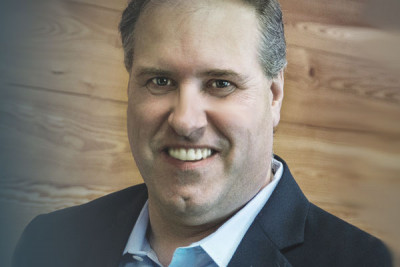
Brian Straight is the Editor in Chief of Supply Chain Management Review. He has covered trucking, logistics and the broader supply chain for more than 15 years. He lives in Connecticut with his wife and two children. He can be reached at [email protected], @TruckingTalk, on LinkedIn, or by phone at 774-440-3870.
Follow SCMR on social media.
@SupplyChainManagementReview on Facebook
@SCMR on Twitter
SCMR on Linkedin
Subscribe

Supply Chain Management Review delivers the best industry content.

Editors’ Picks



