
Sorry, but your login has failed. Please recheck your login information and resubmit. If your subscription has expired, renew here.

November 2019
We hear a lot about emerging technologies like artificial intelligence, machine learning and robotics. We hear less about one of the enabling technologies that makes the others possible: Browse this issue archive.Need Help? Contact customer service 1-508-503-1313 More options
Editors Note: This is the first of a two-part article on performance measurement, and continuation of our series on the future of the strategic supply chain by Steven A. Melnyk. Part 2 will appear in the January/February 2020 issue of Supply Chain Management Review.
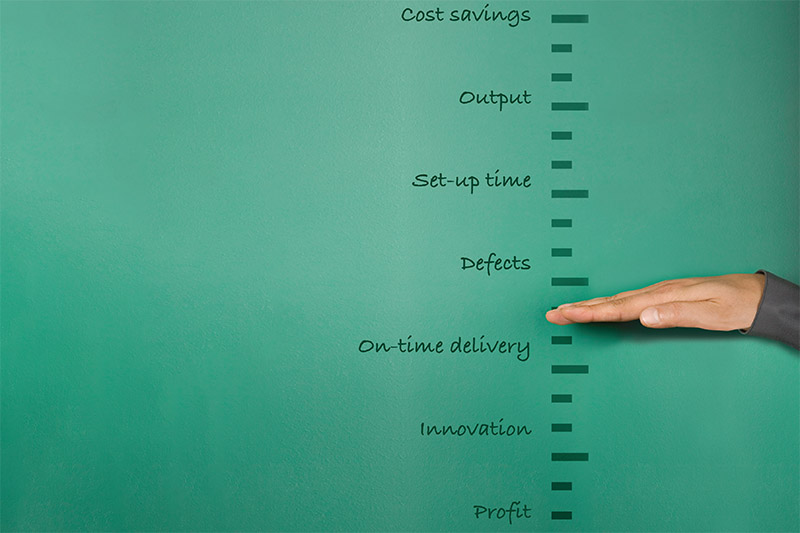
Here’s a question: What’s the most misunderstood, confusing, most improperly applied and ultimately the most frustrating element of a supply chain? If you answered the performance measurement system, you’re on the money. It is also one of the most critical elements of the strategic supply chain that will define supply chain management in the future. Simply put, the functions provided by performance measurement are so critical that no entity, be it a firm or a supply chain, can hope to succeed without them. Yet, we have encountered far too many instances where these measures have either hindered or severely crippled the attempts of the firm to implement, maintain or manage the strategic supply chain.
This article, the sixth in our series on the strategic supply chain, will introduce guidelines that every manager should consider when evaluating their supply chains: know when not to measure; limit the number of measures; focus on root causes; recognize that measures are proxies for behaviors; expect measurement to become more complex; emphasize predictive measures; employ measures to enhance transparency; consider Big Data and social media; and to avoid confusing good supply chain performance with health throughout the supply chain.
Employing these guidelines and establishing an effective performance measurement system is one of the foundations on which the strategic supply chain is built.
The call
Some time ago, one of the authors received a telephone call from a pharma contract manufacturing company based in the southeastern United States. The reason: Management wanted the author to assess the extent to which the current supply chain system was aligned with an important change in corporate strategy.

This complete article is available to subscribers only.
Log in now for full access or start your PLUS+ subscription for instant access.
SC
MR
Sorry, but your login has failed. Please recheck your login information and resubmit. If your subscription has expired, renew here.
November 2019
We hear a lot about emerging technologies like artificial intelligence, machine learning and robotics. We hear less about one of the enabling technologies that makes the others possible: Browse this issue archive. Access your online digital edition. Download a PDF file of the November 2019 issue.Editors Note: This is the first of a two-part article on performance measurement, and continuation of our series on the future of the strategic supply chain by Steven A. Melnyk. Part 2 will appear in the January/February 2020 issue of Supply Chain Management Review.
Here's a question: What's the most misunderstood, confusing, most improperly applied and ultimately the most frustrating element of a supply chain? If you answered the performance measurement system, you're on the money. It is also one of the most critical elements of the strategic supply chain that will define supply chain management in the future. Simply put, the functions provided by performance measurement are so critical that no entity, be it a firm or a supply chain, can hope to succeed without them. Yet, we have encountered far too many instances where these measures have either hindered or severely crippled the attempts of the firm to implement, maintain or manage the strategic supply chain.
This article, the sixth in our series on the strategic supply chain, will introduce guidelines that every manager should consider when evaluating their supply chains: know when not to measure; limit the number of measures; focus on root causes; recognize that measures are proxies for behaviors; expect measurement to become more complex; emphasize predictive measures; employ measures to enhance transparency; consider Big Data and social media; and to avoid confusing good supply chain performance with health throughout the supply chain.
Employing these guidelines and establishing an effective performance measurement system is one of the foundations on which the strategic supply chain is built.
The call
Some time ago, one of the authors received a telephone call from a pharma contract manufacturing company based in the southeastern United States. The reason: Management wanted the author to assess the extent to which the current supply chain system was aligned with an important change in corporate strategy.
SC
MR

Latest Supply Chain News
- From salon to dock door: Repurposing scheduling software for inbound flow
- The biggest barrier to AI in supply chains isn’t technology
- Rebuilding a planning function around the physical world
- Why companies blame the wrong supplier … and miss the real failure
- NextGen Supply Chain Conference unveils agenda focused on AI, execution and the future of leadership
- More News
Latest Podcast
 Explore
Business Management News
- Innovators Netstock, Pickle Robot win NextGen Solution Provider awards
- Bigger trucks versus broken bridges and roads
- From salon to dock door: Repurposing scheduling software for inbound flow
- The biggest barrier to AI in supply chains isn’t technology
- Rebuilding a planning function around the physical world
- Why companies blame the wrong supplier … and miss the real failure
- More Business Management
Latest Business Management Resources
Subscribe

Supply Chain Management Review delivers the best industry content.

Editors’ Picks



