Tuesday, May 5, 2026 · Brian Straight
Agentic AI is shifting procurement from insight to execution by autonomously managing high-volume, low-value transactions and unlocking scale, consistency, and incremental savings across the long tail of spend.
Monday, May 4, 2026 · Brian Straight
Amazon’s new Supply Chain Services platform formalizes a long-building strategy, with VP Peter Larsen explaining why the company believes scale, data, and volatility readiness give it an edge in a crowded 3PL market.
Monday, May 4, 2026 · Brian Straight
Gather AI’s expansion into lift-mounted cameras and enhanced drones reflects a broader shift from scan-based tracking to continuous, AI-driven visibility that captures every movement inside the warehouse.
Saturday, May 2, 2026 · Marisa Brown
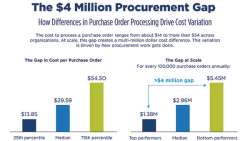
Differences in how procurement processes are designed and executed can create more than a $4 million cost gap at scale.
Friday, May 1, 2026 · Brian Straight
Körber’s collaboration with NVIDIA highlights how advances in computing power and physics-based simulation are turning digital twins into practical, real-time decision tools for supply chain design, execution, and optimization.
Thursday, April 30, 2026 · Brian Straight
Human-in-the-loop automation is emerging as the most practical path for warehouse robotics, as real-world supply chain variability prevents fully autonomous “lights-out” operations from delivering consistent performance.
Wednesday, April 29, 2026 · Mike Burnette
Forecasting failures in supply chains persist not due to flawed analytics, but because of deeply embedded organizational culture, misaligned incentives, and fragmented planning processes that distort true demand signals.
Tuesday, April 28, 2026 · Brian Straight
Despite years of investment in digital tools and AI, supply chain organizations are struggling to turn visibility into action, revealing a growing execution gap driven by misaligned processes, unclear ownership, and limited ROI from technology.
Monday, April 27, 2026 · Brian Straight
One year after its rebrand, Infios is shifting from identity-building to execution, as rising demand, pragmatic AI adoption, and a focus on speed to value redefine how companies invest in supply chain technology.
Friday, April 24, 2026 · Brian Straight
UPS’s network-wide RFID rollout signals a shift from event-based tracking to continuous sensing, enabling real-time visibility that drives faster decisions, fewer errors, and greater supply chain flexibility.
Thursday, April 23, 2026 · Andrew Byer and Mike Dobslaw
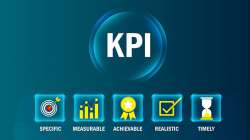
Operational excellence in supply chain management goes beyond hitting KPIs by consistently delivering stretch-target performance that is efficient, predictable, and sustainable over time.
Wednesday, April 22, 2026 · Mel Mohamednur, Director Analyst, Gartner Supply Chain
Supply chain leaders must move beyond AI readiness to redesign talent, performance metrics, and workflows around human–AI collaboration to unlock real operational value.
Tuesday, April 21, 2026 · Nicolò Masorgo, PhD; Thu Trang Hoang, PhD; David D. Dobrzykowski, PhD; John E. Bell, PhD; and Morgan Swink, PhD
E-commerce late orders are driven by a breakdown between warehouse operations and transportation, and can be mitigated through early detection thresholds, strategic deprioritization, and simplified order flows.
Monday, April 20, 2026 · Norman Katz
Retail inventory inaccuracies are less about theft and more about outdated accounting methods like the retail inventory method that distort stock visibility, forecasting, and replenishment decisions.
Friday, April 17, 2026 · Corrine Chen
Supply chains are no longer constrained by data scarcity but by slow, unclear decision-making processes that prevent organizations from acting on insights in real time.
Subscribe to our weekly e-mail update
Don’t miss out on the best in supply chain. Get premium
resources and in-depth, comprehensive feature articles written by the industry's top experts – delivered.