
A new study provides insight for executives as they look ahead, highlighting the importance of carefully assessing automation opportunities, building dedicated RPA capabilities and approaching RPA as part of a broader smart-automation platform for the future.
Over the past few years, robotic process automation (RPA) has become a dominant theme of back-office performance improvement. While early initiatives have produced some tangible successes, many organizations have yet to scale their use of RPA to a level that is making a major impact on performance.
Despite its relative ease of implementation compared to many enterprise technology solutions, RPA has come with a greater-than-expected learning curve.
According to Erik Dorr, Vice President, Research and one of the report's authors, supply chain managers should exercise some caution before committing too much capital for adaptation.
“Many of the same critical thinking methods apply here, too,” he says. “We advise a steady and measured approach to implementing RPA, and making certain that you have the right talent to sustain it.”
While scaling up and expanding adoption of RPA has proven to be challenging, RPA is still poised to play a key role in digital transformation, add researchers.
That role, however, will not be one of stand-alone deployments but rather as one of a number of tools to automate and integrate transactional, decisioning and knowledge work. To plot a path ahead and realize the promise of step-change performance improvement, business functions must begin thinking broader and longer term – developing a vision and roadmap for smart automation that includes both a strategic and tactical role for robotic process automation.
Researchers note that at the same time, as supply chain managers seek to expand the use and role of RPA within their operations, “a reality check” is warranted.
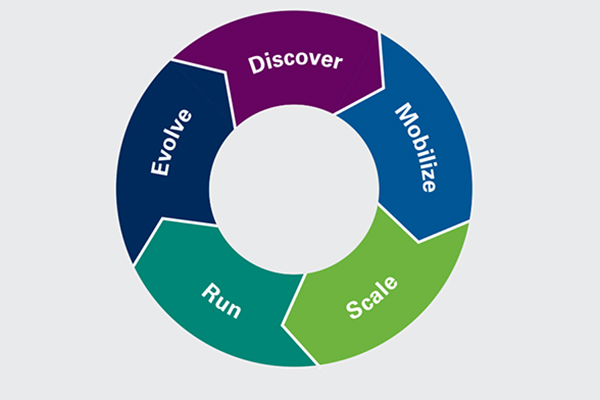
Joshua Nelson, Associate Principal, S&O Supply Chain Practice, says ttrial and error is necessary to learn the capabilities and limitations of RPA, companies that expect mainstream adoption in the near term – as our research suggests many do – will need to exercise discipline around opportunity analysis and development of a business case as part of a robust process for managing the RPA lifecycle.
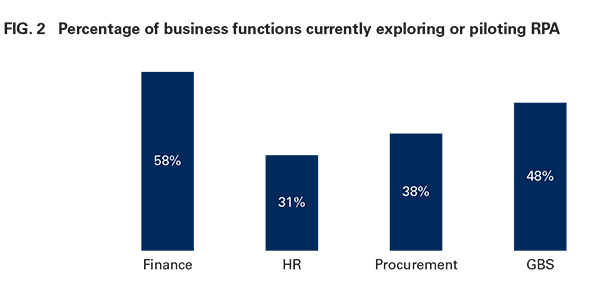
Pilot activity is well underway. Nearly 60% of finance organizations and 48% of GBS organizations are currently exploring or piloting RPA solutions, while around a third of HR and procurement organizations also have RPA pilots in place.
While many organizations still consider themselves in the pilot stage, there have been many success stories – both large-scale adoptions and smart small interventions
Procurement functions lag well behind finance and global business services (GBS) , but slightly ahead of Human Resources.
SC
MR

More Automation
- NextGen Supply Chain Conference unveils agenda focused on AI, execution and the future of leadership
- Beyond the hype: Building flexible and scalable supply chains in a VUCA world
- Technology isn’t strategy
- What the INFORMS Analytics+ Conference revealed about the future of supply chain (and why you might be getting left behind)
- Wayfair executive to share lessons from building a tech-driven delivery network in NextGen Keynote
- The real reason supply chain tech ROI falls short
- More Automation
Latest Resources
 Explore
Topics
Procurement & Sourcing News
- Why companies blame the wrong supplier … and miss the real failure
- NextGen Supply Chain Conference unveils agenda focused on AI, execution and the future of leadership
- From fragmented negotiations to coordinated negotiation performance: an AI-enabled approach
- Supply chain resilience isn’t a data problem; it’s a judgment problem
- Why your supply chain risk management plan will fail
- When component verification becomes operational
- More Procurement & Sourcing
Latest Procurement & Sourcing Resources
About the Author
Patrick Burnson, Executive Editor

Patrick is a widely-published writer and editor specializing in international trade, global logistics, and supply chain management. He is based in San Francisco, where he provides a Pacific Rim perspective on industry trends and forecasts. He may be reached at his downtown office: [email protected].
Follow SCMR on social media.
@SupplyChainManagementReview on Facebook
@SCMR on Twitter
SCMR on Linkedin
Subscribe

Supply Chain Management Review delivers the best industry content.

Editors’ Picks



