
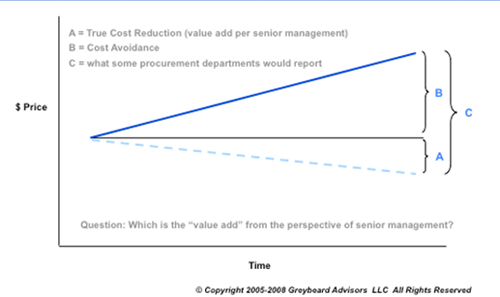
Perhaps the single most important distinction you need to make is to separate cost reduction from cost avoidance. Why do I say that? It’s simple.
Cost reduction in operating expenses can, generally, be tracked to changes in operating costs on the income statement. Cost avoidance doesn’t have the same ability. So, if you try to add cost avoidance to cost reduction, and then report your total “savings,” you’ve just created an apples & oranges amount that has absolutely no relevance to the P & L statement that your internal clients look at on a monthly basis.
That’s not to say that you should not track cost avoidance. I encourage clients to have a robust tracking system that tracks operating cost reductions, capital cost reductions, and cost avoidance. Just never add them together, or you will lose P & L relevance.
More in the next posting.
SC
MR

Latest Supply Chain News
- Bigger trucks versus broken bridges and roads
- From salon to dock door: Repurposing scheduling software for inbound flow
- The biggest barrier to AI in supply chains isn’t technology
- Rebuilding a planning function around the physical world
- Why companies blame the wrong supplier … and miss the real failure
- More News
Latest Podcast
 Explore
Topics
Latest Supply Chain News
- Innovators Netstock, Pickle Robot win NextGen Solution Provider awards
- Bigger trucks versus broken bridges and roads
- From salon to dock door: Repurposing scheduling software for inbound flow
- The biggest barrier to AI in supply chains isn’t technology
- Rebuilding a planning function around the physical world
- Why companies blame the wrong supplier … and miss the real failure
- More latest news
Latest Resources
About the Author
Robert A Rudzki, SCMR Contributing Blogger

Robert A. Rudzki is a former Fortune 500 Senior Vice President & Chief Procurement Officer, who is now President of Greybeard Advisors LLC, a leading provider of advisory services for procurement transformation, strategic sourcing, and supply chain management. Bob is also the author of several leading business books including the supply management best-seller “Straight to the Bottom Line®”, its highly-endorsed sequel “Next Level Supply Management Excellence,” and the leadership book “Beat the Odds: Avoid Corporate Death & Build a Resilient Enterprise.” You can reach him through his firm’s website: www.greybeardadvisors.com
Follow SCMR on social media.
@SupplyChainManagementReview on Facebook
@SCMR on Twitter
SCMR on Linkedin
Subscribe

Supply Chain Management Review delivers the best industry content.

Editors’ Picks



