
Sorry, but your login has failed. Please recheck your login information and resubmit. If your subscription has expired, renew here.
July-August 2018
At Supply Chain Management Review, we’ve been writing about the talent crisis in our profession since at least 2012 when our MIT contributors were publishing a column on talent strategies. Last winter, the topic touched home when I picked up my local newspaper one Saturday morning. One of the lead stories was about two initiatives launched by C&S Wholesale Grocers with two local academic institutions: Keene State College and Franklin Pierce University. Browse this issue archive.Need Help? Contact customer service 1-508-503-1313 More options
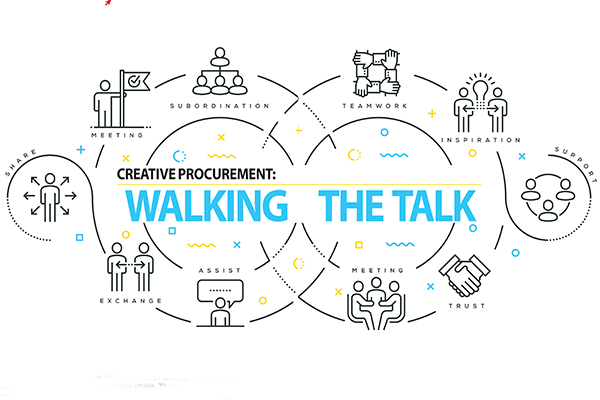
As a profession, procurement is experiencing a dramatic change in philosophy. In “Charting the course: Why procurement must transform itself by 2020,” the consulting firm Deloitte noted significant shifts already underway. From savings and strategic sourcing (called yesterday’s paradigms), to category leadership and managing procurement systems in a global environment (called today’s paradigm), to a radical approach to thinking about procurement as a creative endeavor, generating new ideas and innovating in a talent rich supply chain (called future paradigm).
In our interactions, senior procurement leaders often emphasize “out of the box thinking” in their supply chains. That shift is certainly on the agenda of supply chain conferences and publications. But we wondered:
When it comes to recruiting new hires in their procurement departments, are companies “walking the talk” with reference to recruiting for innovation and creativity? Or are they stuck in “yesterday’s paradigm?” That question motivated this article.
Procurement professionals are problem solvers. First, the level at which they solve problems and the issues are likely different across strategic, managerial and tactical hierarchies. What are these issues? Do they have any bearing on innovation? Second, what are the dominant thinking approaches that firms stress in hiring for procurement positions? These dominant thinking approaches have a bearing on the person they are likely
to hire and consequent activities.

This complete article is available to subscribers only.
Log in now for full access or start your PLUS+ subscription for instant access.
SC
MR
Sorry, but your login has failed. Please recheck your login information and resubmit. If your subscription has expired, renew here.
July-August 2018
At Supply Chain Management Review, we’ve been writing about the talent crisis in our profession since at least 2012 when our MIT contributors were publishing a column on talent strategies. Last winter, the topic… Browse this issue archive. Access your online digital edition. Download a PDF file of the July-August 2018 issue.As a profession, procurement is experiencing a dramatic change in philosophy. In “Charting the course: Why procurement must transform itself by 2020,” the consulting firm Deloitte noted significant shifts already underway. From savings and strategic sourcing (called yesterday's paradigms), to category leadership and managing procurement systems in a global environment (called today's paradigm), to a radical approach to thinking about procurement as a creative endeavor, generating new ideas and innovating in a talent rich supply chain (called future paradigm).
In our interactions, senior procurement leaders often emphasize “out of the box thinking” in their supply chains. That shift is certainly on the agenda of supply chain conferences and publications. But we wondered:
When it comes to recruiting new hires in their procurement departments, are companies “walking the talk” with reference to recruiting for innovation and creativity? Or are they stuck in “yesterday's paradigm?” That question motivated this article.
Procurement professionals are problem solvers. First, the level at which they solve problems and the issues are likely different across strategic, managerial and tactical hierarchies. What are these issues? Do they have any bearing on innovation? Second, what are the dominant thinking approaches that firms stress in hiring for procurement positions? These dominant thinking approaches have a bearing on the person they are likely
to hire and consequent activities.
SC
MR

Latest Supply Chain News
- Supply chain resilience isn’t a data problem; it’s a judgment problem
- Beyond the hype: Building flexible and scalable supply chains in a VUCA world
- Why your supply chain risk management plan will fail
- When component verification becomes operational
- Caught between a rock and a hard place: Mapping your supply chain
- More News
Latest Resources
 Explore
Procurement & Sourcing News
- Why companies blame the wrong supplier … and miss the real failure
- NextGen Supply Chain Conference unveils agenda focused on AI, execution and the future of leadership
- From fragmented negotiations to coordinated negotiation performance: an AI-enabled approach
- Supply chain resilience isn’t a data problem; it’s a judgment problem
- Why your supply chain risk management plan will fail
- When component verification becomes operational
- More Procurement & Sourcing
Latest Procurement & Sourcing Resources

Subscribe

Supply Chain Management Review delivers the best industry content.

Editors’ Picks



