
Sorry, but your login has failed. Please recheck your login information and resubmit. If your subscription has expired, renew here.
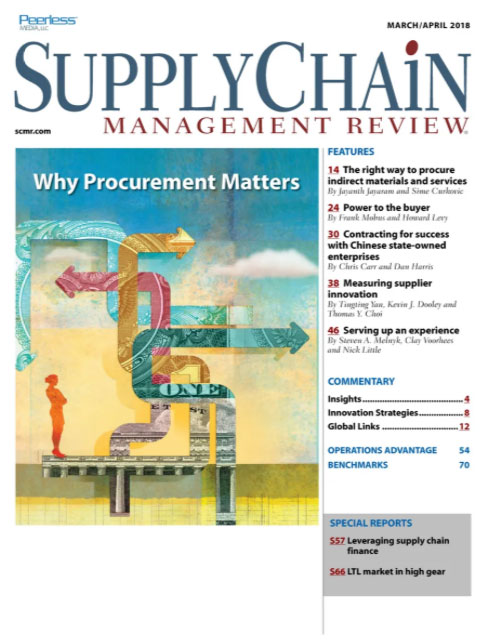
March-April 2018
"Inflation creeps into U.S. Supply Chain.” So said the headline on a Wall Street Journal article I read this morning before writing this column. The Journal went on to write that U.S. companies are grappling with rising material and ingredient costs on top of pressure from higher wages—a potential double whammy— and noted that companies like Whirlpool and Ford have already issued warnings to the market. Browse this issue archive.Need Help? Contact customer service 1-508-503-1313 More options
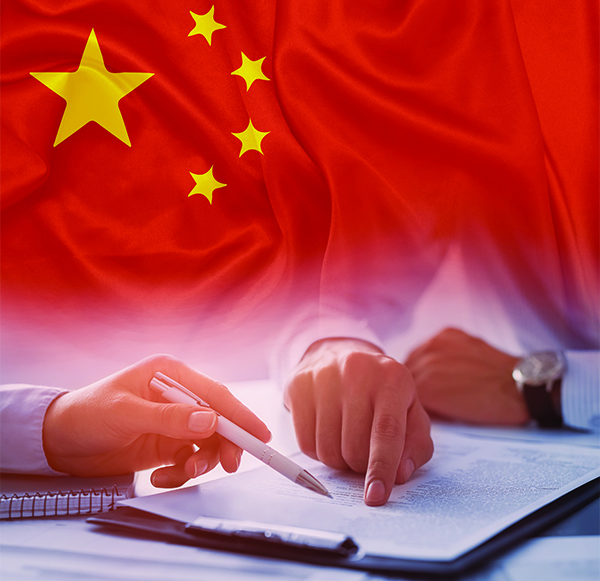
Even after several decades of reform, state- owned enterprises (SOEs) in China continue to account for a significant portion of the Chinese economy. In fact, the central government, under President Xi Jinping, has made clear that the prominence and power of SOEs will grow.
Foreign firms doing business in or with China are likely to sell products and services to Chinese SOEs. However, doing deals with them presents very different challenges when there is a dispute—in sharp contrast to contracting with privately owned firms.
When a dispute with a Chinese SOE requires the Chinese legal system for resolution, the harsh reality is that Chinese courts typically do not view the parties as equals. This puts foreign firms at a significant disadvantage.

This complete article is available to subscribers only.
Log in now for full access or start your PLUS+ subscription for instant access.
SC
MR
Sorry, but your login has failed. Please recheck your login information and resubmit. If your subscription has expired, renew here.
March-April 2018
"Inflation creeps into U.S. Supply Chain.” So said the headline on a Wall Street Journal article I read this morning before writing this column. The Journal went on to write that U.S. companies are grappling… Browse this issue archive. Access your online digital edition. Download a PDF file of the March-April 2018 issue.Even after several decades of reform, state- owned enterprises (SOEs) in China continue to account for a significant portion of the Chinese economy. In fact, the central government, under President Xi Jinping, has made clear that the prominence and power of SOEs will grow.
Foreign firms doing business in or with China are likely to sell products and services to Chinese SOEs. However, doing deals with them presents very different challenges when there is a dispute—in sharp contrast to contracting with privately owned firms.
When a dispute with a Chinese SOE requires the Chinese legal system for resolution, the harsh reality is that Chinese courts typically do not view the parties as equals. This puts foreign firms at a significant disadvantage.
SC
MR

Latest Supply Chain News
- Rebuilding a planning function around the physical world
- Why companies blame the wrong supplier … and miss the real failure
- NextGen Supply Chain Conference unveils agenda focused on AI, execution and the future of leadership
- From fragmented negotiations to coordinated negotiation performance: an AI-enabled approach
- Supply chain resilience isn’t a data problem; it’s a judgment problem
- More News
Latest Resources
 Explore
Procurement & Sourcing News
- Why companies blame the wrong supplier … and miss the real failure
- NextGen Supply Chain Conference unveils agenda focused on AI, execution and the future of leadership
- From fragmented negotiations to coordinated negotiation performance: an AI-enabled approach
- Supply chain resilience isn’t a data problem; it’s a judgment problem
- Why your supply chain risk management plan will fail
- When component verification becomes operational
- More Procurement & Sourcing
Latest Procurement & Sourcing Resources
Subscribe

Supply Chain Management Review delivers the best industry content.

Editors’ Picks



