Monday, March 2, 2026 · Dean Alms, chief product officer, Aravo
A review of 2025’s AI predictions shows that while agentic AI and automation advanced in supply chains, data readiness, governance gaps, and third-party risk oversight will determine whether organizations realize real AI ROI in 2026.
Friday, February 27, 2026 · Marko Kovacevic
In an era of tariffs, geopolitical fragmentation, and macroeconomic volatility, supply chain leaders can create competitive advantage by distinguishing quantitative from qualitative shocks, controlling operational levers, and building resilient, partnership-driven networks…
Thursday, February 26, 2026
As a supply chain leader, you constantly battle fragmented systems, manual bottlenecks and a lack of financial visibility. This webinar addresses your core frustrations of legacy processes, disparate systems and poor data consistency. Learn how your future supply chain solves…
Thursday, February 26, 2026 · Andrew Byer and Mike Dobslaw
“Bringing the outside in” means shifting supply chain planning and execution from internally driven metrics to real-time, market-based data such as POS, competitive activity, and external events to improve service, stability, and financial performance.
Wednesday, February 25, 2026 · Joseph Coughlin
Demographic change, including aging populations, declining fertility, smaller households, and regional workforce fragmentation, is reshaping demand patterns, labor availability, and last-mile expectations, making demography a critical but overlooked strategic variable in…
Tuesday, February 24, 2026 · Rosemary Coates
Despite escalating U.S.–China tariffs and trade sanctions, China’s economy is expanding, global market diversification is accelerating, and rare earth dominance remains a strategic pressure point for American supply chains.
Monday, February 23, 2026 · Brian Straight
As AI accelerates both cyberattacks and defenses, supply chain leaders must shift from prevention-only strategies to resilience-driven models built on third-party visibility, governance, and rapid recovery.
Friday, February 20, 2026 · Brian Straight
The U.S. Supreme Court’s 6–3 ruling striking down President Trump’s IEEPA tariffs reshapes the legal landscape of U.S. trade policy but leaves procurement leaders navigating refund complexities, contractual uncertainty, and the likelihood of alternative tariff actions.
Friday, February 20, 2026 · Mita Gupta, EVP and business unit head, WNS Procurement
CPOs can manage escalating tariff risk in 2026 by using category-level exposure mapping, total cost of ownership analysis, supplier segmentation, and AI-powered modeling to respond proportionally rather than reactively.
Thursday, February 19, 2026 · Prabhat Rao Pinnaka & Ramakrishna Garine
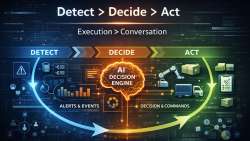
Agentic AI is transforming supply chain operations by moving beyond chatbot-style assistance to governed, ontology-backed execution systems that autonomously detect, decide, and act within defined guardrails.
Wednesday, February 18, 2026 · SCMR Staff
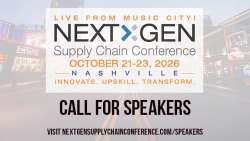
The 2026 NextGen Supply Chain Conference is now accepting speaker submissions for its practitioner-led event in Nashville, inviting supply chain leaders to share real-world case studies focused on AI, automation, workforce transformation, and measurable operational impact.
Wednesday, February 18, 2026 · Meghan O’Doherty, Senior Director Procurement Advisory, Gartner Supply Chain Practice
AI is transforming procurement by automating transactional sourcing work while creating entirely new AI-driven roles that require CPOs to rethink talent strategy, upskill teams, and redesign how procurement creates value.
Tuesday, February 17, 2026 · Arturo Torres Arpi Acero
After early AI agent pilots failed to deliver measurable operational or P&L impact, supply chain leaders are resetting automation strategies by focusing on decision ownership, governance, data integrity, and constrained autonomy instead of full end-to-end automation.
Monday, February 16, 2026 · Tim Russell, Abdullah Alsukairi and Olivia Morton
MIT Capstone study models fuel distribution capacity in the New Madrid Seismic Zone to identify infrastructure, labor, and policy interventions that can strengthen emergency fuel resilience before a major earthquake disrupts critical supply chains.
Monday, February 16, 2026 · Norman Katz
To achieve a true Perfect Order in today’s regulatory environment, companies must add a “right data” requirement, integrating accurate, traceable, and compliant information into ERP and EDI systems to meet mandates and retail vendor compliance expectations.
Subscribe to our weekly e-mail update
Don’t miss out on the best in supply chain. Get premium
resources and in-depth, comprehensive feature articles written by the industry's top experts – delivered.