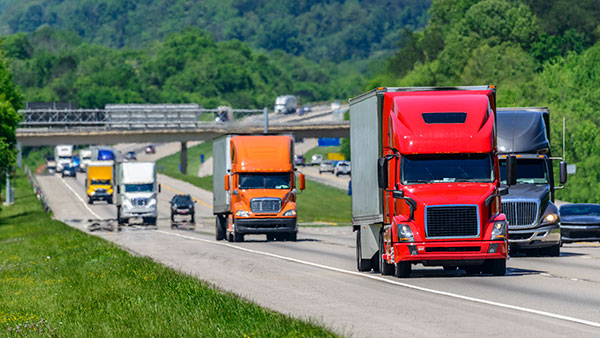
A proposal to increase truck weight limits from 80,000 to 91,000 pounds has reignited debate over freight efficiency, infrastructure resilience, bridge safety and the long-term costs of…
An industrial manufacturer dramatically improved inbound logistics by repurposing Microsoft Bookings into a low-cost dock scheduling system, reducing yard congestion by roughly 90% and…
AI will only improve supply chain performance if organizations first simplify workflows, standardize processes and build disciplined operations; otherwise, it simply automates existing complexity…
A proposal to increase truck weight limits from 80,000 to 91,000 pounds has reignited debate over freight efficiency, infrastructure resilience, bridge safety and the long-term costs of America's aging transportation network.
Friday, July 17, 2026 · Bruce Rishel and Blake Brownlee
An industrial manufacturer dramatically improved inbound logistics by repurposing Microsoft Bookings into a low-cost dock scheduling system, reducing yard congestion by roughly 90% and demonstrating how creative technology adaptation can accelerate supply chain execution.
Thursday, July 16, 2026 · Kevin Brown, Dell Technologies’ EVP of Global Operations and CSCO
AI will only improve supply chain performance if organizations first simplify workflows, standardize processes and build disciplined operations; otherwise, it simply automates existing complexity and inefficiency.
Traditional forecasting fails when demand is driven by external events, making causal demand sensing based on weather, installed assets and other real-world signals a more accurate and resilient approach to modern supply chain planning.
Companies investigating supply chain failures often blame the supplier identified in their ERP system rather than tracing the actual component lot, causing organizations to miss the true root cause and repeat the same manufacturing risks.
Monday, July 13, 2026 · Adi Bijedic, Geoffrey Boutin, Felix Brockerhoff
AI is reshaping how procurement teams prepare and execute supplier negotiations. As cost pressure intensifies and supplier dynamics become more complex, CPOs need a faster, more coordinated approach to protect margins and deliver consistent value.
Friday, July 10, 2026 · Alex Solis and Rodney Thomas
Supply chain resilience depends less on technology and more on managerial judgment, organizational flexibility, and the ability to make high-quality decisions under uncertainty.
Thursday, July 9, 2026 · Tim Tetzlaff, Digital Transformation Officer, DHL Supply Chain
Building resilient supply chains in today’s volatile business environment requires standardized digital platforms, integrated automation, and AI-powered orchestration that enable humans and robots to work together in flexible, scalable operations.
Wednesday, July 8, 2026 · Evan Smith, CEO and Co-founder, Altana
Traditional supply chain risk management systems are no longer sufficient for today’s trade environment, requiring companies to adopt AI-powered, product-level visibility and end-to-end traceability to manage tariffs, regulatory compliance, and geopolitical risk.
Component verification must move beyond supplier qualification to lot-level integrity checks, because the most costly supply chain failures often stem from misrepresented components that pass standard inspections and are only discovered after production or field failures.
As the U.S. seeks to enforce laws against using forced labor in supply chains, China has countered with laws that make it illegal to map supply chains inside China.
Supply chain teams operate in environments where conditions can change by the hour (or faster). To keep pace, many organizations are embedding AI directly into their workflows. AI-driven systems increasingly help teams monitor operations, identify risks, surface…
Thursday, July 2, 2026 · Neal Walters and Bill Duffy
As labor shortages, capacity constraints, and record infrastructure spending reshape capital markets, leading organizations are turning to risk-sharing contracts to improve execution, accelerate decision-making, and gain a competitive advantage in project delivery.
If you believe the headlines, AI is about to put global supply chains on autopilot, quietly sidelining planners, buyers, and logistics managers. That may make for great clickbait, but it’s not the story unfolding inside leading supply chain organizations.
Thursday, July 2, 2026 · Gastón Cedillo, Ph.D. and Chris Mejia-Argueta, Ph.D.
For decades, trade agreements have focused on fundamental components: product or service features, markets, regulatory standards, investment protections, and dispute resolution. Recent supply chain disruptions have exposed critical weaknesses.
Subscribe to our weekly e-mail update
Don’t miss out on the best in supply chain. Get premium
resources and in-depth, comprehensive feature articles written by the industry's top experts – delivered.